



SEDIMENT REMOVAL

Submersible Pumps for Desilting

Move the sediment that remains.

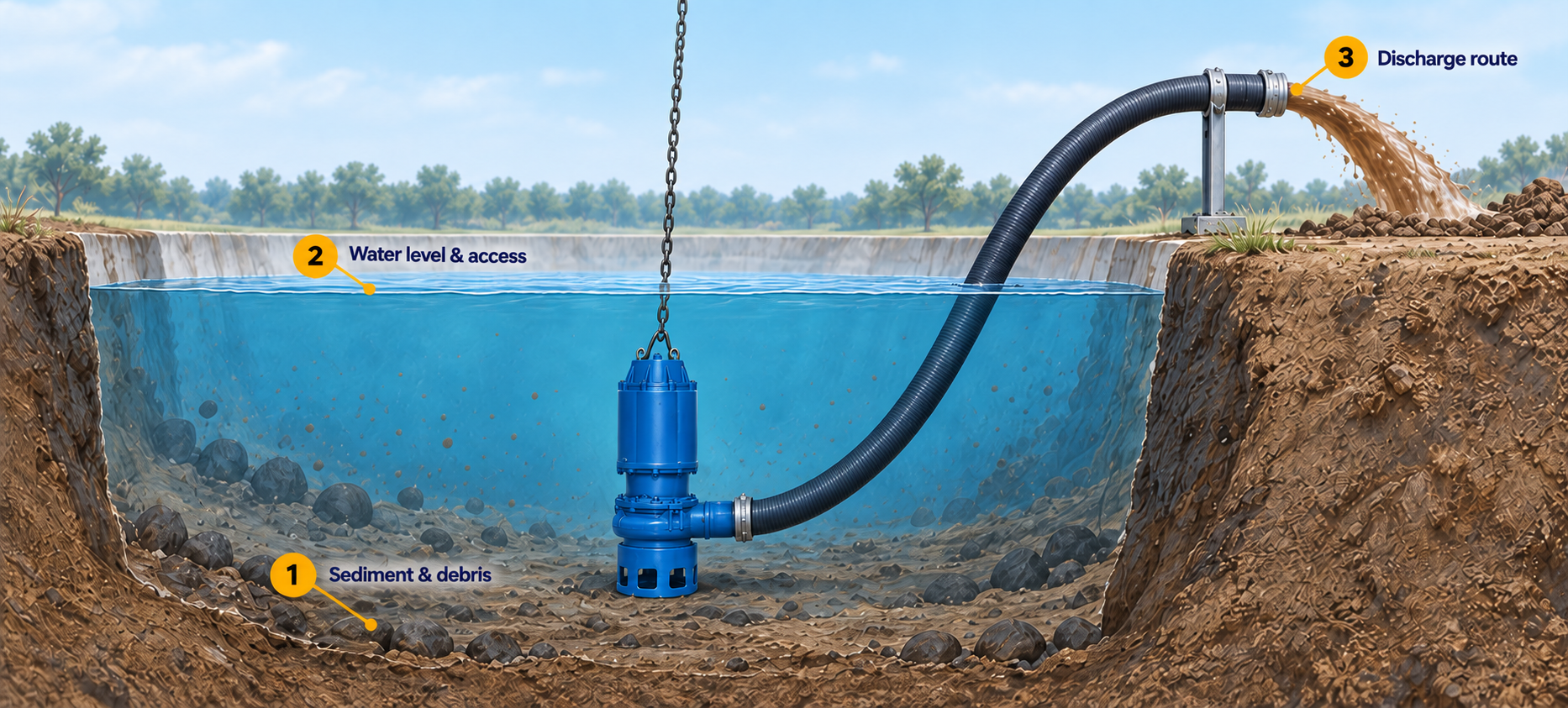
Submersible pumps for desilting must move sediment as well as water. Connect sediment pickup, submerged pumping and the solids-laden discharge duty.

Application illustration: submerged slurry pump, sediment, changing water level and discharge hose.

Application illustration

Start with what needs to move.

Effective removal depends on how the sediment reaches the intake and travels through the pump.

Sediment behaviour

Loose sand, fine silt and cohesive material need different pickup considerations. Establish how settled material will reach the intake.

Solids & wear

Particle size and concentration guide solids-passage and wear-part decisions. Include dense pockets as well as the typical mixture.

Debris & obstruction

Rags, stones or oversized debris need a separate handling plan. Identify them before selecting the pump or any inlet screening.

Keep the pumping position workable

Changing water levels

Check the selected pump’s immersion requirements at the lowest working level. Plan how operation will respond as the level falls.

Positioning & retrieval

The pump needs access to the sediment and a practical lifting route. Plan repositioning and retrieval as part of the removal method.

Access at the surface

Leave room for lifting equipment, hose routing and maintenance. A pump that fits the pit must also be accessible for service.

BBP’s submersible slurry pumps handle sediment-laden liquid. Match the actual sediment and working arrangement to the selected equipment.

THE REMOVAL METHOD

A desilting duty extends beyond the pump.

Define how material becomes pumpable, how equipment moves through the work area and where the mixture goes. These choices determine the job the pump must perform.

Sediment pickup

When the bed stays behind

A pump may draw available water while settled or compacted material remains outside the intake. The required liquid flow is only part of a sediment-removal objective.

Selection focus

Describe the bed condition and the method of bringing sediment to the intake. Where material needs loosening or mobilisation, establish that method and its equipment separately, then match the pump to the resulting slurry.


Working area

When the pump must move

A basin or pit may require several working positions, each with a different hose route or lift.

Selection focus

Compare the accessible positions and retrieval method. Include the longest or most demanding discharge route so the selected duty also represents the later stages of the work.

Receiving point

When discharge sets the limit

The outlet level, receiving pressure and pipe losses affect transfer. Changes at the receiving end can change the flow through the line.

Selection focus

Include the discharge destination and its operating conditions in the duty. Coordinate the removal rate with the receiving process and account for solids transport through the complete hose or pipe run.

Carry it to the destination.

The required duty includes the entire discharge route. A longer or altered line can change the flow available for sediment transport.

Pipe diameter

Balance friction losses with the velocity needed to carry the solids.

Lift & distance

Combine elevation with hose length, bends and other losses when establishing head.

Discharge point

Include outlet level and receiving pressure so the transfer ends at the required location.

Pumps for the sediment duty

APPLICATION QUESTIONS

Questions before planning sediment removal.

The application brief should describe a removal method and a site arrangement, as well as the pump duty.

Is a drainage-pump duty enough for desilting?

Clear-water drainage and sediment removal describe different work. For desilting, include the material to be moved, how it reaches the intake and the solids-laden discharge duty. The proposed QSZ or other slurry equipment must suit that complete requirement.

Can one pump remove every type of settled material?

The pickup method and the pump’s permitted solids and operating conditions need to be assessed together. Compacted sediment, cohesive material or oversized debris may require additional preparation or separate handling. A submersible label alone does not establish removal capability.

Are hoses, lifting equipment and controls included?

Define them in the enquiry and confirm them in the quotation. Identify the required hose or pipe, cables, controls and lifting arrangement, together with what is already available on site. Keeping these interfaces explicit helps make equipment proposals comparable.

Plan the removal from pickup to discharge.

Discuss the sediment, changing water level and route with BBP. Site photos or a simple sketch help explain access and positioning.