








WASTEWATER HANDLING

Pumps for Sewage & Industrial Effluent

Select pumps for sewage and industrial effluent by reviewing solids, blockage risks and maintenance access.

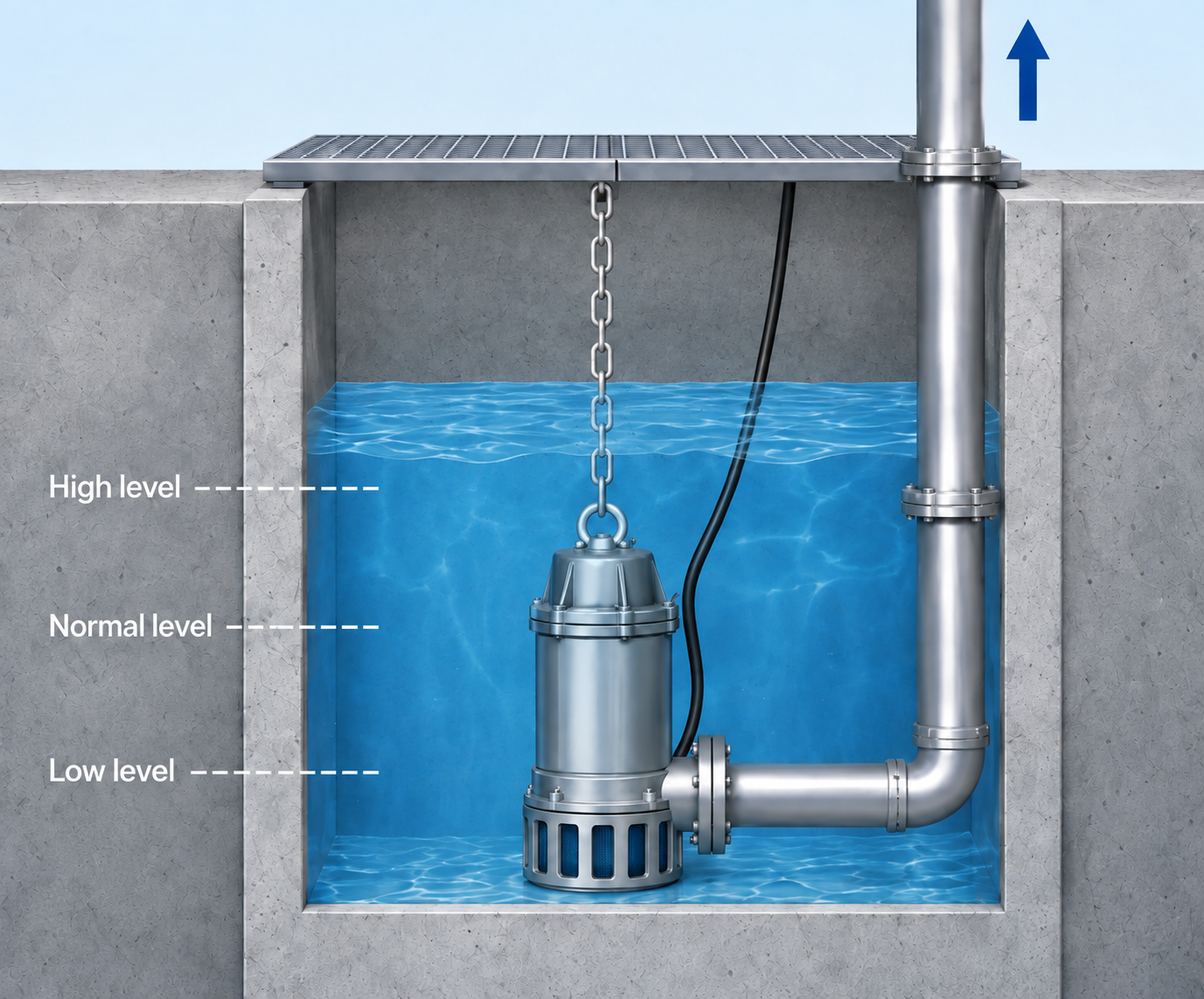
Submersible installation

Application illustration of a fully submerged pump connected to a discharge riser

Application illustration

Pumping within the wet well

An ASW submersible arrangement places the pump in the liquid. Check changing levels against immersion requirements and the operating cycle.

Plan removal for service

Provide lifting access and a suitable discharge connection. Retrieval and maintenance space should be decided with the installation.

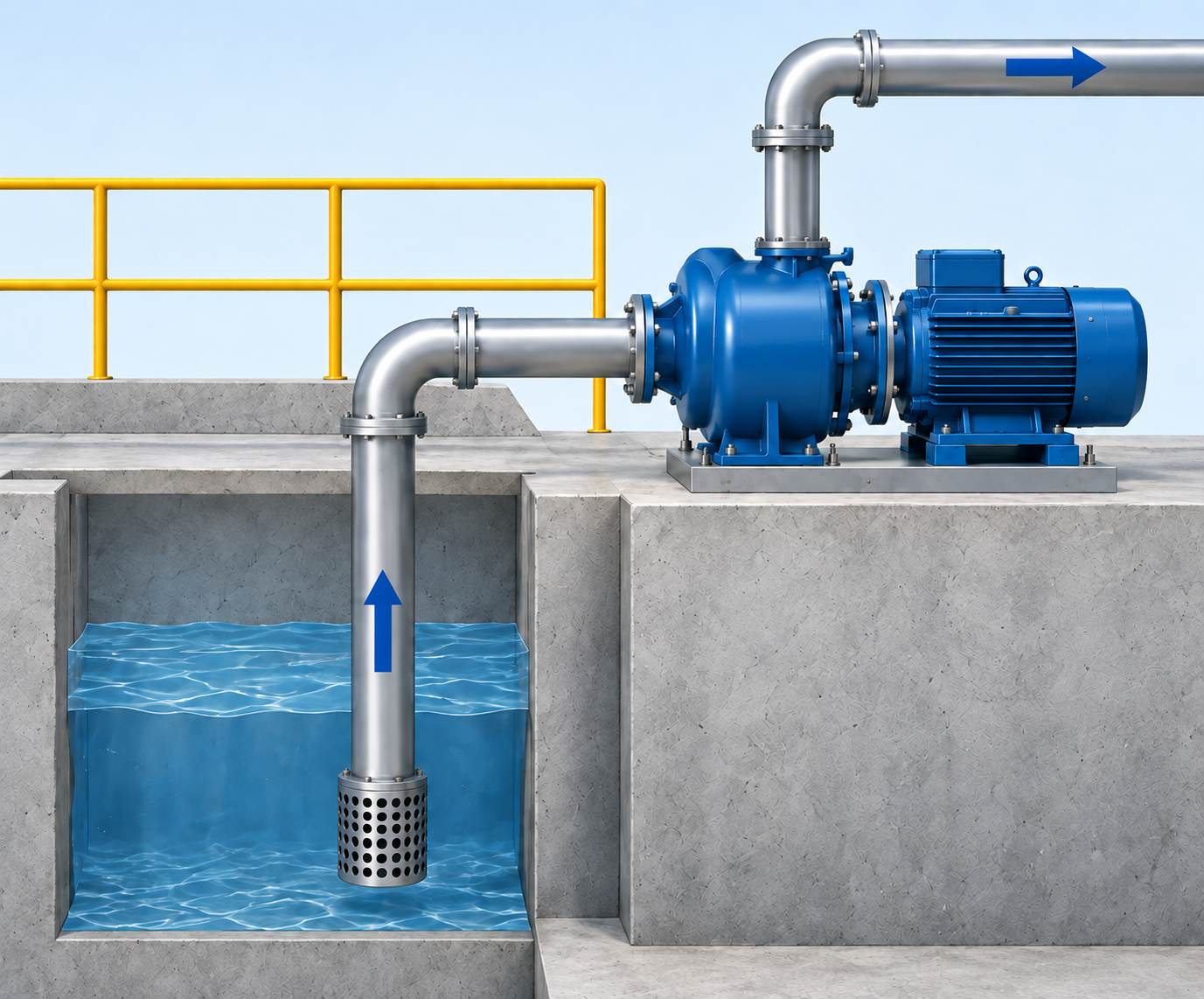
Self-priming installation

Application illustration of a dry-mounted self-priming pump with suction and discharge pipework

Application illustration

Suction conditions set the limit

An AZW self-priming arrangement uses a dry-installed pump and suction line. Suction lift, line losses, air leaks and priming conditions affect delivery.

Access above the liquid

A dry location can make inspection and service access easier. It still needs space, suitable pipework and access for clearing obstructions.

Choose around the liquid, suction conditions and the way your team will maintain the station.

Match the hydraulics to what arrives.

Fibres & rags

Fibrous material can catch on an impeller even when a solid of similar size can pass. Passage diameter alone does not establish resistance to clogging.

Solids & debris

Particle size, shape and concentration guide passage requirements. Identify oversized debris and the role of any upstream screening.

Industrial discharge

Process effluent may contain chemicals or changing mixtures. Establish the actual composition before treating it as a general sewage duty.

Temperature & materials

Check wetted materials and seals against liquid chemistry and temperature, including intermittent hot or chemical discharges.

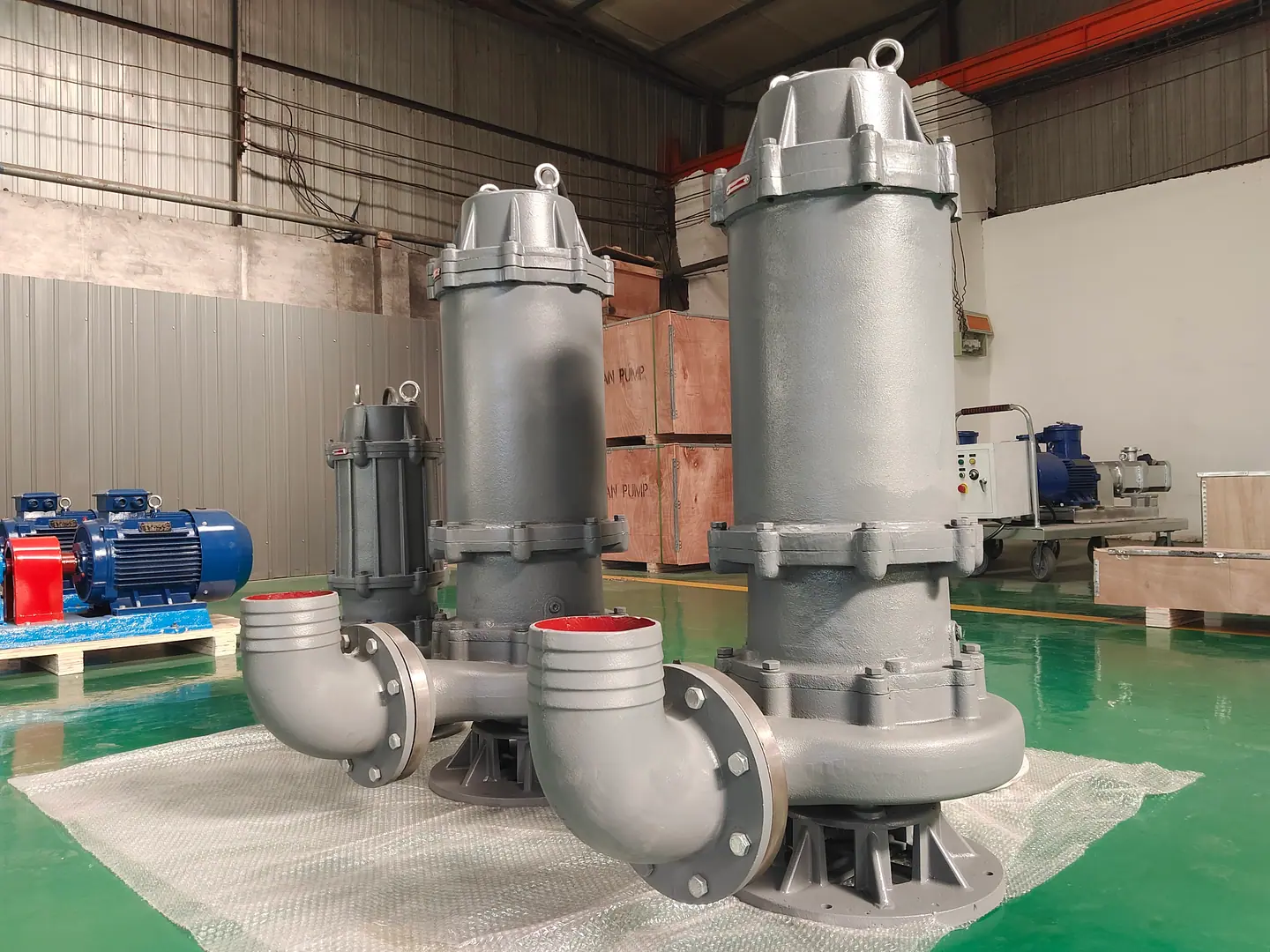
Silver sewage pump equipment in a workshop

Workshop equipment photograph

For repeated blockages, include what was removed, where it lodged and when flow changed. These observations help focus the selection discussion on the cause.

UNDERSTAND RECURRING STOPPAGES

Different symptoms need different responses.

Describe what stopped the transfer and where it occurred. These observations help focus a review on the hydraulics, incoming waste or inlet arrangement.

Observed pattern

Implication for selection

Fibres collecting

Rags or fibres catch around the wet end.

Flexible material can interact with the impeller differently from a hard particle. A nominal passage diameter does not fully describe this behaviour.

Record the material and where it accumulated. Compare the hydraulic arrangement with the actual fibrous content and duty, and include any changes in the incoming wastewater.

Oversized debris

Large or irregular items obstruct the passage.

Items outside the selected pump’s passage capability may require a separate upstream handling strategy.

Identify their size and form and the role of existing screening. Compare the pump’s actual solids-handling requirements with the incoming stream; resolve oversized debris as part of the collection system.

Suction or priming

A dry-installed pump loses delivery.

Air leakage, restricted suction flow or an unsuitable lift can affect a self-priming installation without a blockage in the pump passage.

Include the suction route, liquid levels and the conditions when delivery changed. Check the selected manual’s inlet and priming requirements before treating the issue as a need for larger solids passage.

Compare ASW and AZW pumps

APPLICATION QUESTIONS

Questions before selecting a wastewater pump.

Liquid contents and installation conditions belong together. They determine what the pump has to pass and how it will be operated and maintained.

Does “non-clog” mean any waste can pass?

No. Solids size, shape, fibrous content and operating conditions still matter. Assess the selected hydraulic arrangement against the real wastewater and any upstream screening. Oversized debris and difficult fibres should be identified explicitly rather than covered by the family label.

Does self-priming mean the pump can run dry?

Self-priming describes the designed air-clearing and priming function; it is not a dry-running rating. Use the selected AZW manual to establish initial filling, inlet conditions and permitted operation. Those requirements should be included when comparing it with a submerged installation.

Can a stainless-steel sewage pump handle industrial effluent?

Suitability depends on the actual stainless grade, liquid composition, concentration and temperature, together with solids and seal requirements. Include occasional process or cleaning discharges as well as the normal stream. A material label alone cannot confirm compatibility.

Bring the blockage problem into the brief.

Share the liquid, duty and wet-well levels with BBP. Add obstruction photos and the existing installation when replacing a pump.