The right response depends on when water is used and which outlet must still receive it.
BUILDINGS
Keep the critical outlet in view.
Upper floors and simultaneous users can set the demanding condition. Review the supply available at the lowest inlet pressure and the pressure needed at the most difficult outlet.
PROCESS WATER
Match the production pattern.
A process may draw steadily, in batches or only during a cleaning cycle. Establish which users run together before selecting a pump combination and control mode.
DISTRIBUTION
Account for the route as well as the demand.
Long pipe runs, changing delivery elevations and storage arrangements affect the duty. Locate the pressure reference where it can represent the service you need.
PUMPS WITHIN THE SOLUTION
Choose the pump arrangement. Then build the system.
Start with the same flow and pressure requirement when comparing these two BBP equipment families.
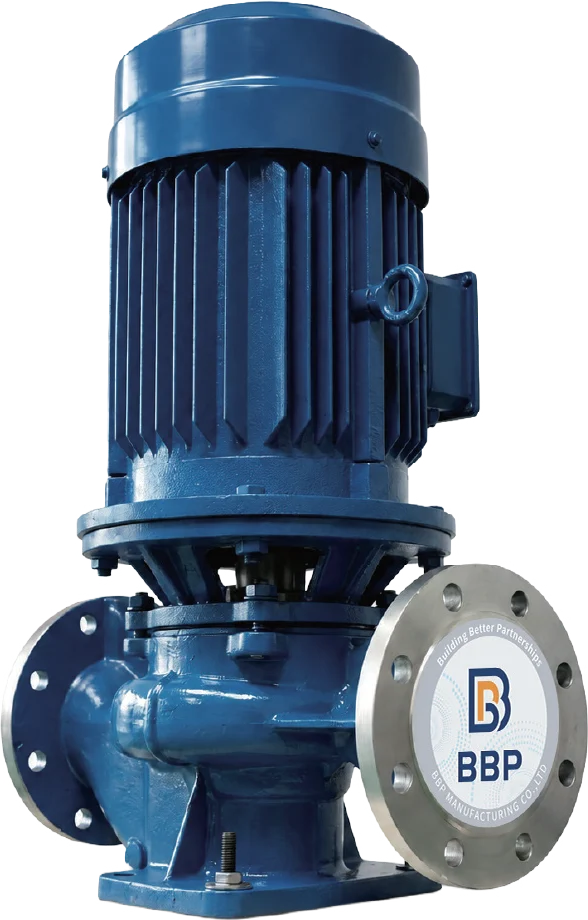
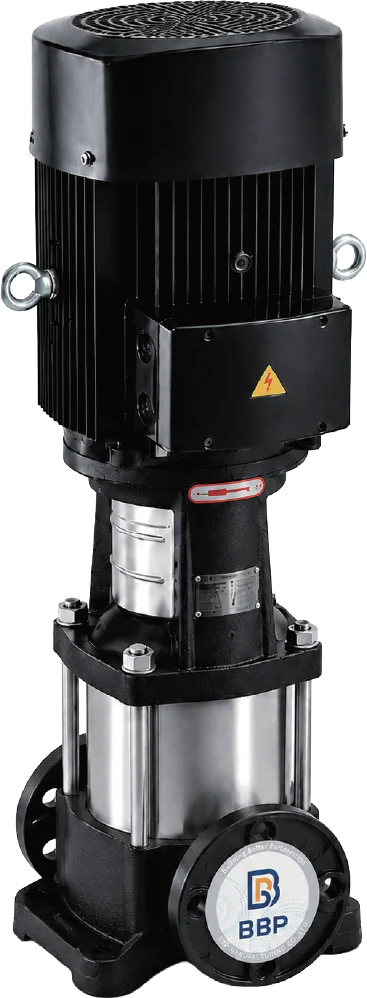
QIG · VERTICAL INLINE
For a compact pipeline arrangement.
A vertical pump-and-motor assembly for pipeline boosting and water circulation. Review the installation envelope and the required pressure increase against the QIG curve.
Stacked pump stages in a vertical assembly provide a different equipment route for clean-water boosting. These pumps are non-self-priming; inlet supply and liquid suitability belong in the selection.
Define normal and peak flow, the pressure increase and the capacity required while one pump is unavailable.
02
Control and protection
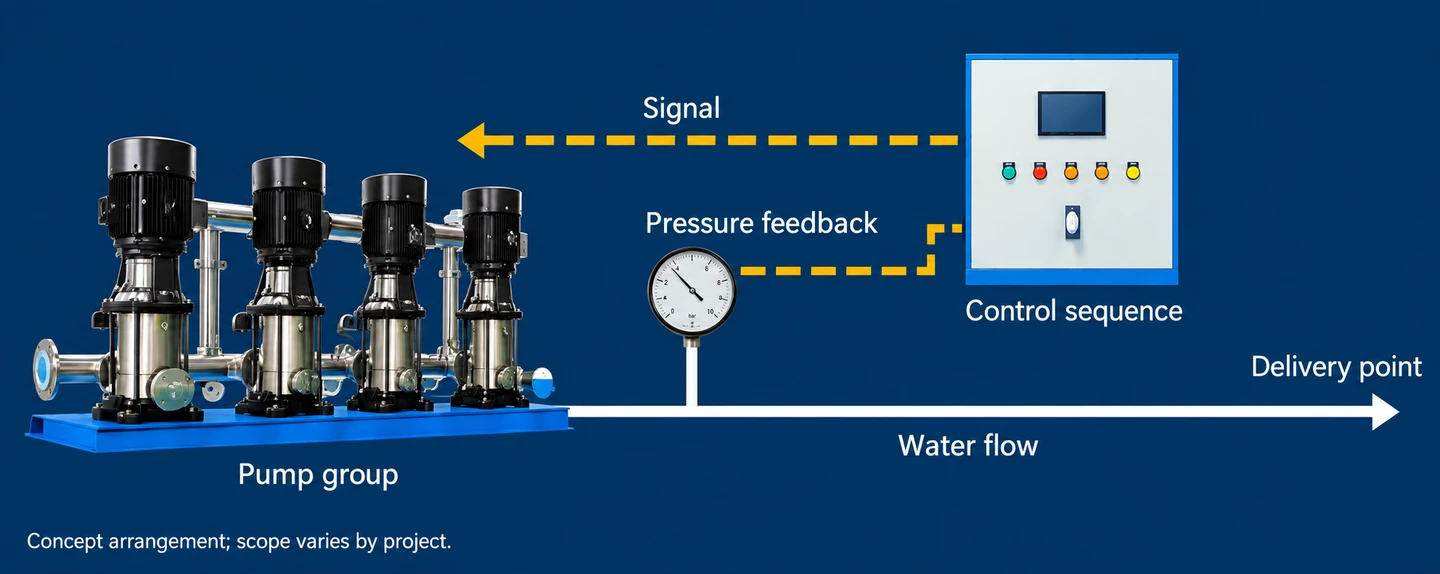
Agree variable-speed or staged operation, sensing location, low-inlet protection and any connection to the building or plant control system.
03
Installation and handover
Identify pipework, valves, instruments, electrical supply and commissioning responsibilities. Confirm which items are included in the quotation.
Before choosing a system
Answers to common questions from engineers and equipment buyers.
Which pump family should I start with?
Compare QIG vertical inline pumps for pipeline arrangements with QDL / QDLS vertical multistage pumps for a multistage boosting arrangement. The required flow, pressure increase, liquid and inlet conditions determine which series and model to review.
Does the pump automatically include a complete booster package?
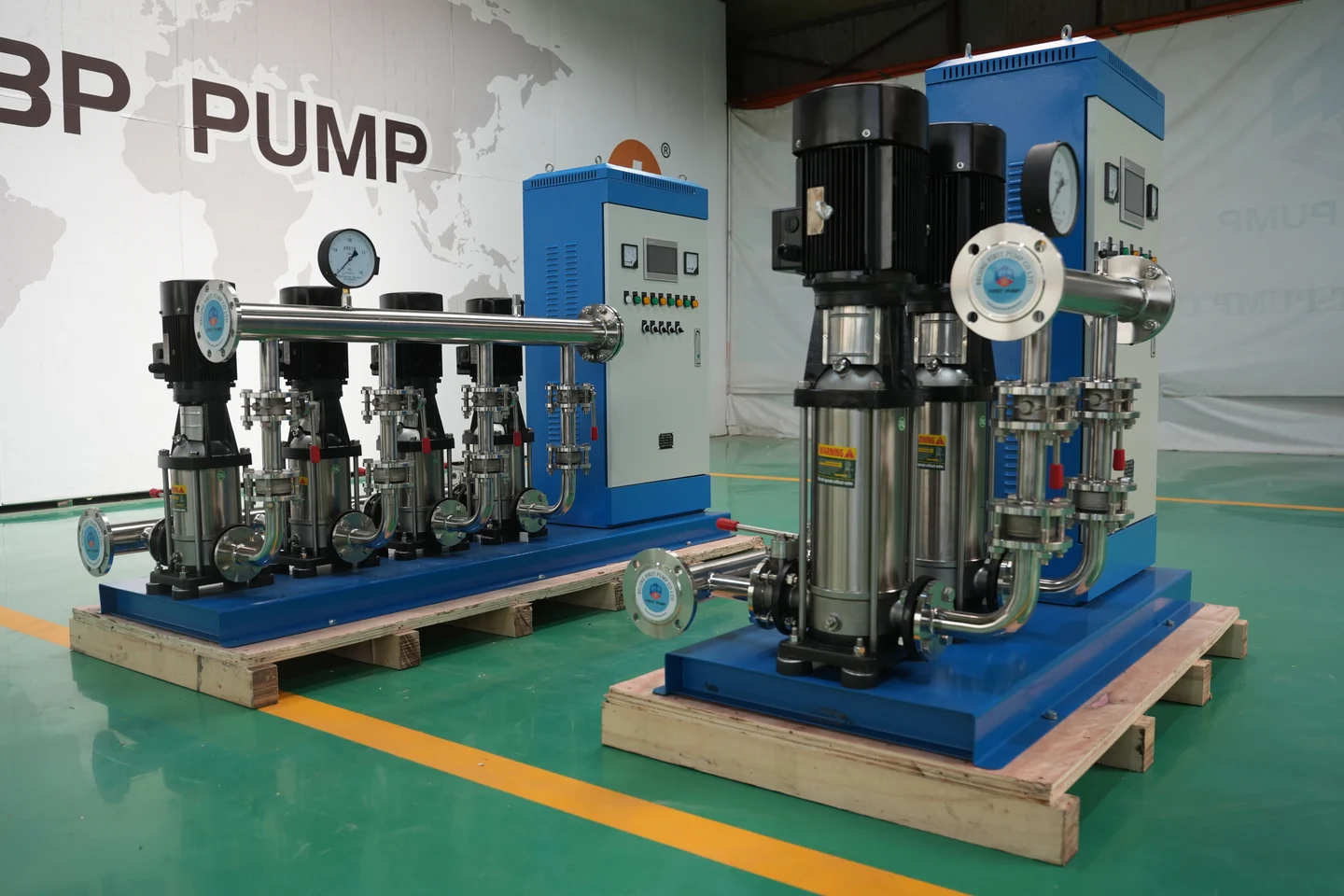
Define the required pump quantity, motor, controls, instruments, valves, pipework and standby duty in the enquiry. The quoted scope establishes which equipment and control functions are included.
Does a second pump simply double the flow?
The resulting flow depends on the combined pump curves and the connected system. Compare the proposed pump combination across the required operating range.
Can a booster be selected from outlet pressure alone?
Include the available inlet pressure, the required flow range and the location of the critical outlet. These establish the pressure increase the pump must provide.
Start with the pressure problem.
Tell us where pressure is short and how demand changes.