WATER SYSTEMS

Pumps for Water Transfer & Irrigation

Match water transfer and irrigation pumps to the flow your operation needs.

Source

Secure the inlet supply

System

Account for head losses

Delivery

Meet flow and pressure

The duty is set by the whole system.

1

At the source

Falling water levels change suction conditions. Check the inlet layout and available suction head against the pump’s requirement.

2

Along the route

Elevation and friction losses determine the head required. Actual flow is where the pump curve meets the system curve.

3

At delivery

Required outlet pressure and simultaneous demand define useful delivery. A nameplate flow alone cannot establish performance at the destination.

Select for the way demand changes.

Demand patterns and their selection implications
Demand patternSelection implication
Steady supplyMatch the normal duty to an appropriate operating region for sustained use.
Seasonal demandAssess changing source levels and flow demand across the season.
Peak or batch useCompare peak duration with normal demand before choosing pump size and control strategy.
Replacing a pumpMeasure the present duty and identify system changes before repeating the original selection.
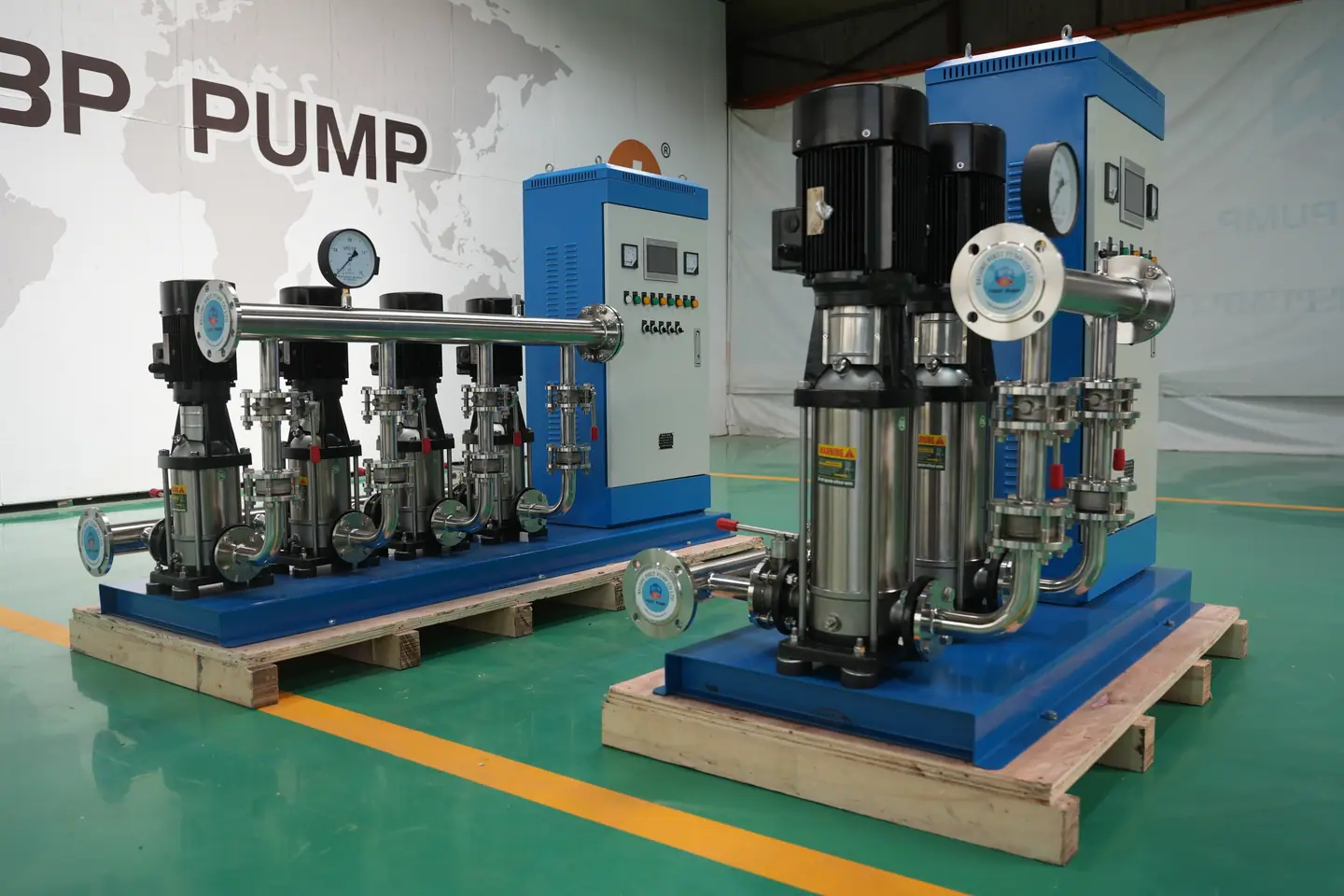
Water pump sets with controls and pipework

Equipment photograph

Avoid carrying a mismatch forward.

Poor delivery can originate in the source, pipeline or operating point. Bring the existing curve, measured flow and pressure, and pipe layout to the discussion so a replacement addresses the actual duty.

LOCATE THE CONSTRAINT

Find what limits useful delivery.

A low-flow complaint can originate at the source, along the pipeline or in a changed demand pattern. Identify that constraint before increasing pump size.

Source

The inlet cannot support the required duty.

A lower source level or a more restrictive inlet can change the suction conditions available to the pump.

Selection focus

Check source levels and the inlet arrangement against the selected pump’s suction requirement. A larger discharge capability does not resolve an unsuitable inlet supply.

Pipeline

More of the head is used by the route.

Additional pipework, altered valves or a higher destination can change the system curve and the operating flow.

Selection focus

Update the route and loss information before comparing new curves. This helps determine whether the next step concerns the pipework, pump duty or both.

Demand

The operating pattern has changed.

More simultaneous users, different irrigation zones or a changed transfer schedule can create a wider duty range.

Selection focus

Compare normal and peak conditions with the pump arrangement and control approach. A proposed extra pump or speed change must be assessed against the system, rather than treated as a fixed increase in output.

Compare the relevant BBP pump families

APPLICATION QUESTIONS

Questions before choosing a water pump.

Useful delivery is the flow and pressure required at the destination, across the operating conditions your site actually sees.

Why can site flow differ from a catalogue value?

A centrifugal pump operates where its curve meets the system curve. Source and delivery conditions and the resistance of the pipework determine that intersection. Use the relevant model curve and complete system duty when assessing the required flow.

Will adding a second pump double the flow?

Not automatically. Parallel operation changes the combined pump curve, while the system still sets the resulting operating point. The additional flow depends on the shape of the system curve and the selected pumps. Assess the combined operation before choosing the arrangement.

How should I compare end-suction, split-case and mixed-flow pumps?

Begin with the flow, total head and expected operating range, then compare the relevant curves. QI end-suction, QS double-suction and AHW mixed-flow constructions also have different layouts and access needs. Match hydraulic suitability and installation fit together.


Define useful delivery at the destination.

Discuss the source, pipeline and normal-to-peak demand with BBP to compare suitable pump types.