CHALLENGE
Water availability changes.
SOLUTION
Match the abstraction rate to the tested well yield. Allow for pumping-level variation and suitable low-water protection.
THE RESULT

DEEP-WELL WATER SUPPLY SOLUTIONS
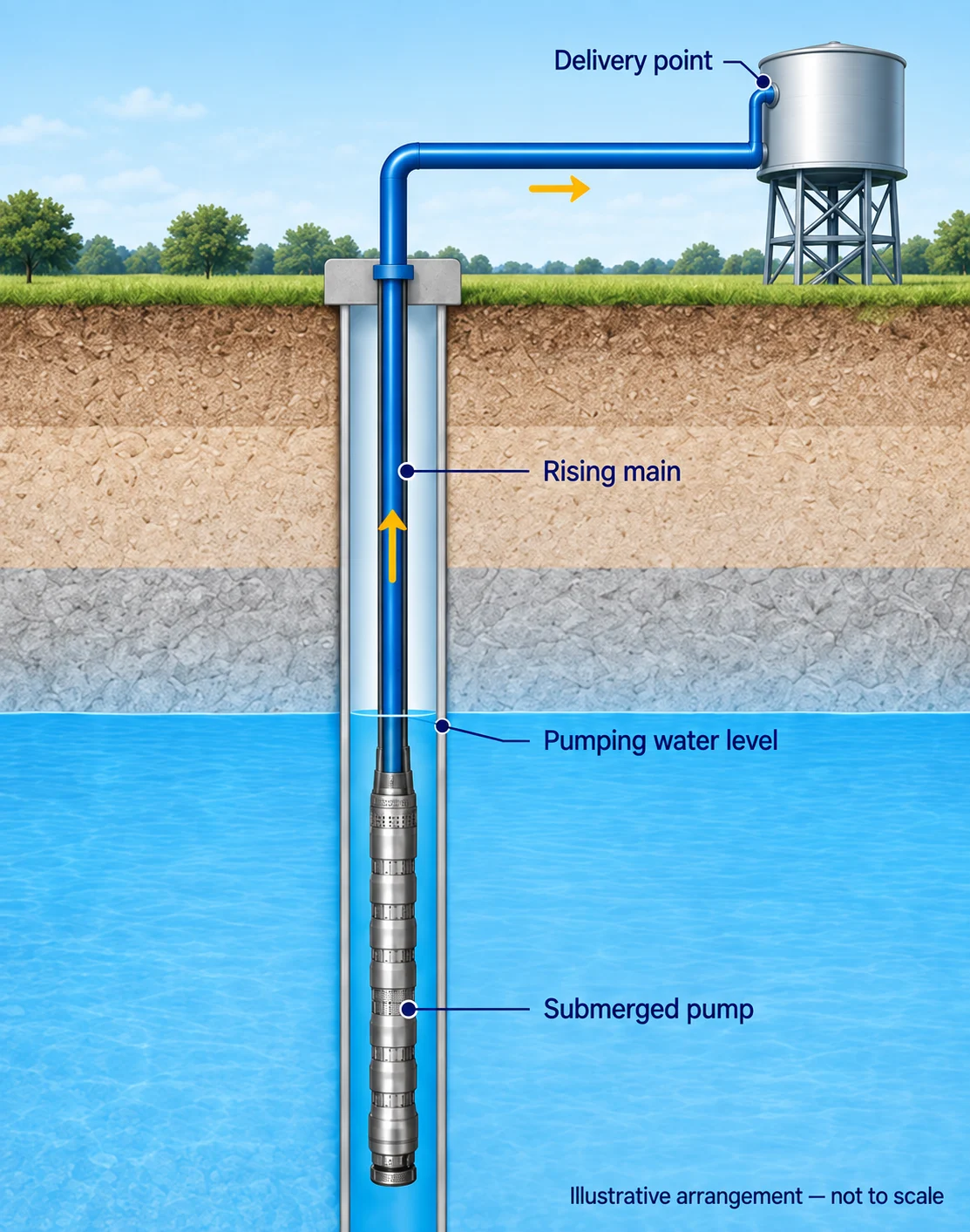
Connect the well’s available water, the installed pump and the delivery duty.
Farm water · Industrial supply · Community water
CHALLENGE
SOLUTION
Match the abstraction rate to the tested well yield. Allow for pumping-level variation and suitable low-water protection.
THE RESULT
CHALLENGE
SOLUTION
Coordinate borehole clearance, setting, motor cooling, rising main and cable as one installation.
THE RESULT
CHALLENGE
SOLUTION
Size the delivery duty from the pumping level to the outlet, including elevation, pipe losses and required pressure.
THE RESULT
Source-aware abstraction
Coordinated installation
Delivery-based selection
THE EQUIPMENT BELOW GROUND
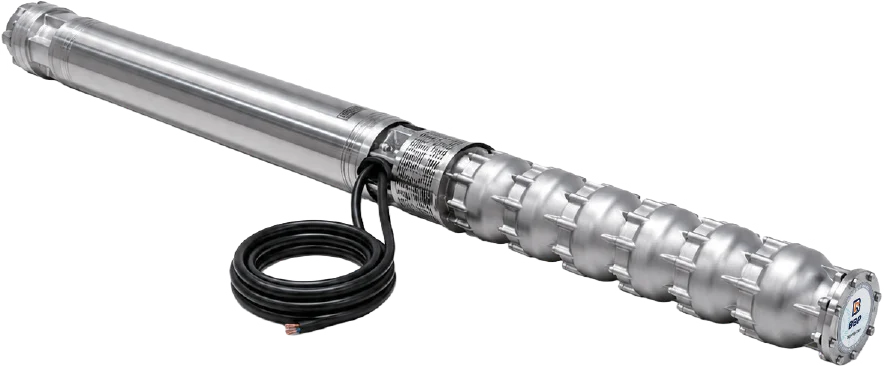
The ASJ deep-well assembly brings a submersible pump and directly coupled motor together. Review the assembly as part of the complete borehole installation.
PUMP
Select the hydraulic duty from the pumping water level to the delivery point, including pipe losses and required outlet pressure.
MOTOR
Check the motor supply, cooling and submergence requirements against the actual well and selected assembly.
INSTALLATION
Confirm clear borehole diameter, setting constraints, cable route, rising main and lifting access before finalising the arrangement.
AFTER THE WELLHEAD
The well establishes the available water. The delivery arrangement establishes what the pump must supply.
ROUTE A
For direct supply, include the elevation, pipe losses and required outlet pressure in the well-pump duty. Coordinate operation with changes in use and the tested source capacity.
ROUTE B
Where storage is part of the project, review well filling and downstream delivery as separate duties. A booster stage may be considered if the downstream network needs additional pressure.
FROM SITE RECORD TO EQUIPMENT
A well record explains the source and installation. A delivery record explains the water service you need.
01 / WELL & INSTALLATION
Well-test flow and pumping water level Static level, test date and reference datum Clear diameter, casing and setting limits Water analysis and known sand content Power supply, cable route and lifting access
02 / DELIVERY & OPERATION
Required flow and operating hours Delivery elevation and outlet pressure Rising main and delivery-pipe route Tank levels or direct-supply demand Start, stop and low-water protection needs
ASJ is the BBP deep-well submersible pump family for groundwater supply. Review the complete pump-and-motor assembly, liquid limits, installation diameter and selected model curve against your well and delivery duty.
That depends on the delivery arrangement. A well pump may supply the destination directly, or fill storage from which a separate pump serves the network. Assess the downstream pressure requirement before deciding whether a booster stage is needed.
No. Delivery head follows the route from the pumping water level to the outlet, including elevation, required outlet pressure and pipe losses. Total well depth also affects installation planning, but does not by itself establish the pump duty.
Base the review on pumping-test information and known level variation. Match abstraction to the available source, and establish suitable installation and low-water protection requirements for the site.
Start with the water-use problem and the available well record.
Safe preview: this request is stored privately in WordPress. It does not send email or contact a CRM.