Pump Applications in Water Treatment
Water-treatment plants move different liquids at different stages. Raw-water transfer, treated-water delivery, wastewater handling and solids removal should each have a distinct duty record.
The key decision
The plant name is not the pump specification. Identify what enters the pump at that process stage, where it must go and how operators will access the equipment.
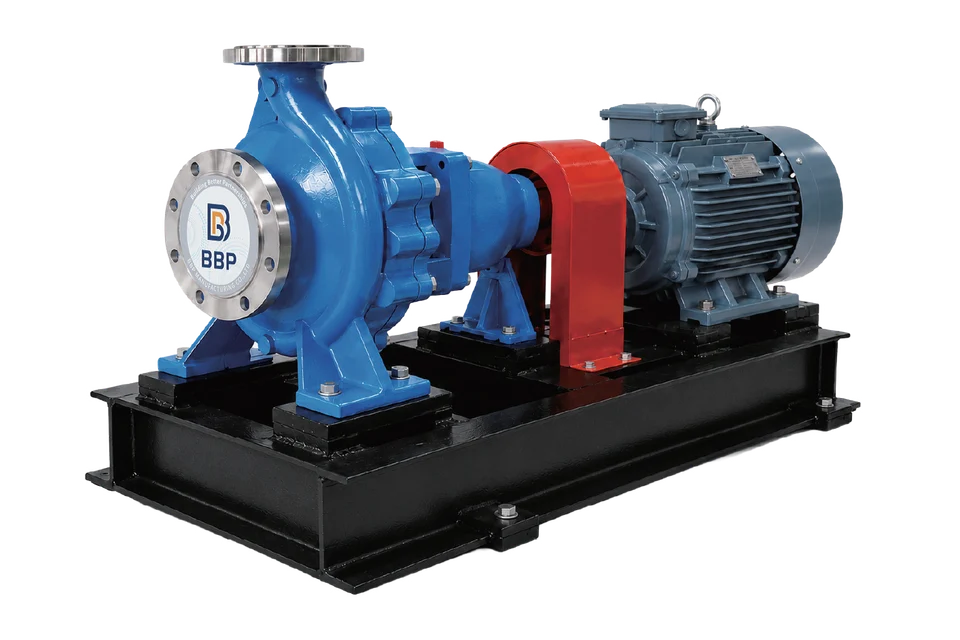
QI end-suction water pump — brochure photograph.
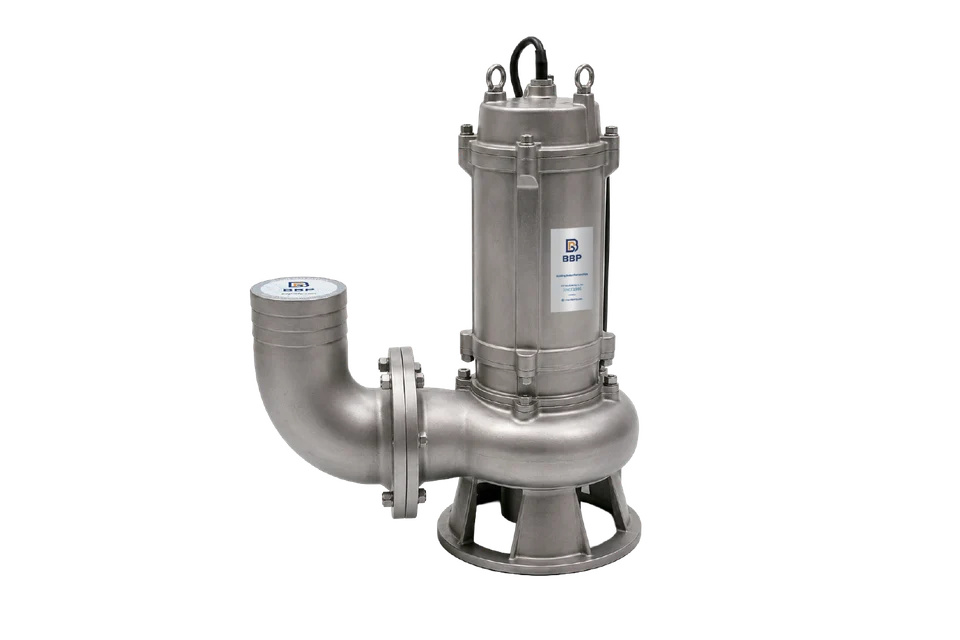
ASW submersible sewage pump — brochure photograph.
1. Map the duty to the process stage.
Begin with the equipment tag or process location. Describe the liquid at the actual pump inlet, including relevant solids, fibres, treatment chemicals and temperature. Avoid using treated-water assumptions for a stream that contains wastewater or settled solids.
| Process duty | Question to resolve first |
|---|---|
| Water transfer or supply | Required flow, source levels and delivery conditions. |
| Pressure boosting | Available inlet pressure and required pressure at the point of use. |
| Wastewater transfer | Solids, fibres, chemistry and installation arrangement. |
| Sediment or solids removal | Material, concentration, particle size and discharge route. |
Keep unusual discharges or cleaning conditions visible. They may require a separate review even when the normal stream is well described.
2. Connect process demand to the site.
Record normal and peak flow, the source-level range and the delivery requirement. Include the pipe route, elevation and relevant equipment losses. State whether the duty is continuous, intermittent or tied to a process cycle.
For sump or submerged equipment, include working levels, positioning and lifting access. For a dry-installed arrangement, describe the inlet supply and available installation space. Check how the equipment will be accessed during the plant’s operating schedule.
- Pump location and source or sump conditions.
- Discharge route and destination.
- Power supply, controls and site signals.
- Access, lifting and planned maintenance arrangements.
3. Follow the family that matches the stream.
Use the BBP product directions to organise the next technical discussion:
- Centrifugal Water Pumps and Split Case Pumps for water-transfer duties to be checked against model data.
- Booster Pumps when the requirement is to increase delivery pressure.
- Sewage Pumps for wastewater arrangements, with liquid contents and installation reviewed together.
- Slurry Pumps where solids information and the pumping arrangement call for a slurry review.
- Chemical Pumps for a process-liquid and materials discussion.
A family link is a starting direction. It does not confirm that every model handles every stream in a treatment plant.
4. Issue one duty record per pump tag.
Use a consistent plant schedule, with one row or sheet for each pump tag. Keep the process stream, duty, installation, materials and supply requirements together. Distinguish duty and standby requirements where applicable.
Example enquiry structure
Tag and process stage · liquid description · minimum/normal/peak duty · level range and delivery route · proposed installation · controls · maintenance access · required documents · unresolved data.
This makes it easier to compare proposals and prevents one plant-wide description from concealing materially different pump duties.
Frequently asked questions
Can one pump type cover the entire treatment plant?
Different process stages may involve different liquids, solids and installation conditions. Review each duty separately before comparing families.
Should treated water and wastewater use the same data sheet?
Use a consistent format, but issue distinct liquid and duty records for each stream and pump tag.
Where should I begin if the family is unclear?
Start with the process stage, liquid contents, required flow and delivery conditions, then request selection support.
Sources and further reading
General references used for this guide. Review the applicable model data and project requirements for your own duty.