
Pump Material Selection
Pump material selection starts with the complete liquid, solids and temperature record. Compare the wetted casing or liner, impeller, seal components and elastomers using the actual material grades and operating conditions.
The key decision
Start pump material selection with the medium and compare wetted parts component by component. Chemical resistance is one part of suitability; abrasion, temperature, sealing and the actual configuration also require review.
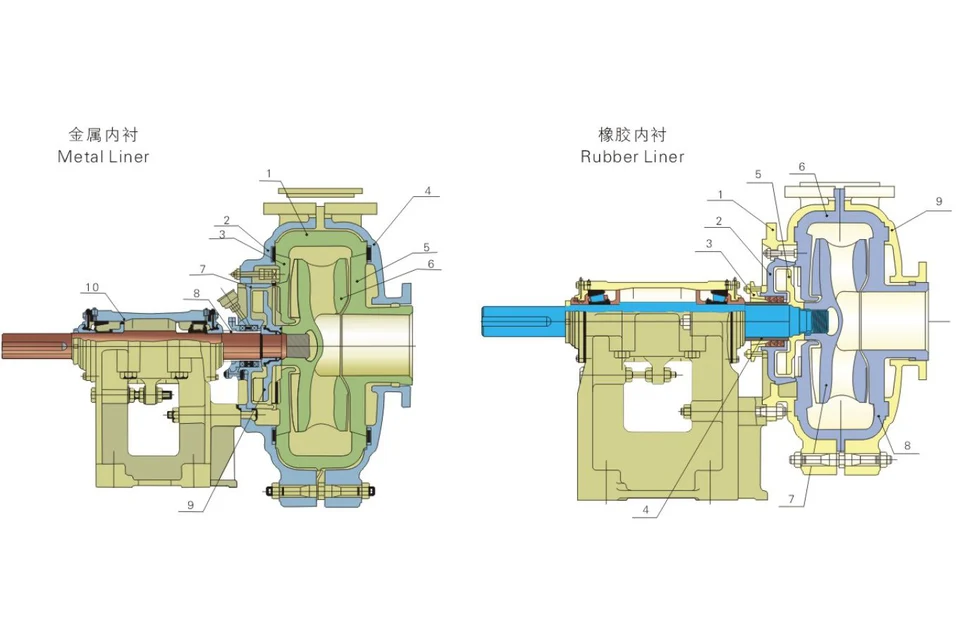
AM catalogue, page 18: metal-lined and rubber-lined pump construction.
1. Describe the complete medium.
Provide chemical identity, concentration, mixtures and temperature. Add cleaning or flushing liquids if the equipment will encounter them. A product trade name or broad process label may omit constituents that matter to the review.
For solids-bearing liquids, retain concentration with its mass or volume basis, particle-size information and available solids characteristics. Keep normal service and occasional process excursions separate.
| Record | Why it belongs in the review |
|---|---|
| Composition and concentration | Identifies what the material contacts. |
| Normal and limiting temperature | Keeps the temperature basis visible. |
| Solids information | Adds the abrasive or particulate part of the duty. |
| Cleaning or changed process | Identifies contact conditions outside normal production. |
2. Review the pump wetted parts.
List the wetted casing or liner, impeller, seal components, elastomers and other wetted parts applicable to the assembly. Ask for the actual material grade or specification where it is required by the project.
The AM catalogue construction drawings show metal-lined and rubber-lined arrangements. They illustrate different construction options; they do not establish compatibility with a particular liquid or prove that two parts are interchangeable.
Chemical-resistance tables can help organise an initial review, but their scope and conditions matter. A table for a cast metal is not automatically a recommendation for an elastomer or a complete seal assembly.
3. Compare proposals on the same basis.
Use a component schedule rather than a single material label. For each relevant part, record the required material, proposed material and any qualification or open question. Keep the medium and temperature record attached to that schedule.
| Component | Record in the proposal |
|---|---|
| Casing or liner | Material grade and configuration. |
| Impeller and wear parts | Material and applicable component reference. |
| Seal and elastomers | Proposed arrangement and material references. |
| Requested verification | Required documents or inspection items, with their scope. |
If a supplier proposes an alternative, ask which original requirement it addresses and which conditions still need confirmation. Keep the agreed alternative in the revised quotation.
4. Treat a material change as an equipment change.
For an existing pump, identify the installed configuration and explain why a different material is being considered. Provide the operating history and photographs of the relevant condition. Check compatibility with the assembly and mating parts before ordering.
Do not infer corrosion resistance, service life or suitability from a photograph alone. Continue with technical clarification for a proposal review or spare-parts support for a replacement request.
Frequently asked questions
Is stainless steel a sufficient specification?
Identify the required grade and the components it applies to. Suitability must be reviewed against the actual medium and conditions.
Can a resistance table confirm the whole pump?
Use the table within its stated scope. Review other wetted materials, sealing and the operating conditions separately.
Can I replace a metal component with rubber?
Confirm the available construction, component compatibility and duty suitability for the actual model. Treat the change as a configuration review.
Sources and further reading
General references used for this guide. Review the applicable model data and project requirements for your own duty.