Home

SLURRY HANDLING

Rubber-Lined Slurry Pump

An elastomer wet end for the right slurry.

Rubber-lined AM-family pumps for slurry duties where particle shape, chemistry and temperature suit an elastomer wet end.

Installation
Horizontal, dry-installed
Wet end
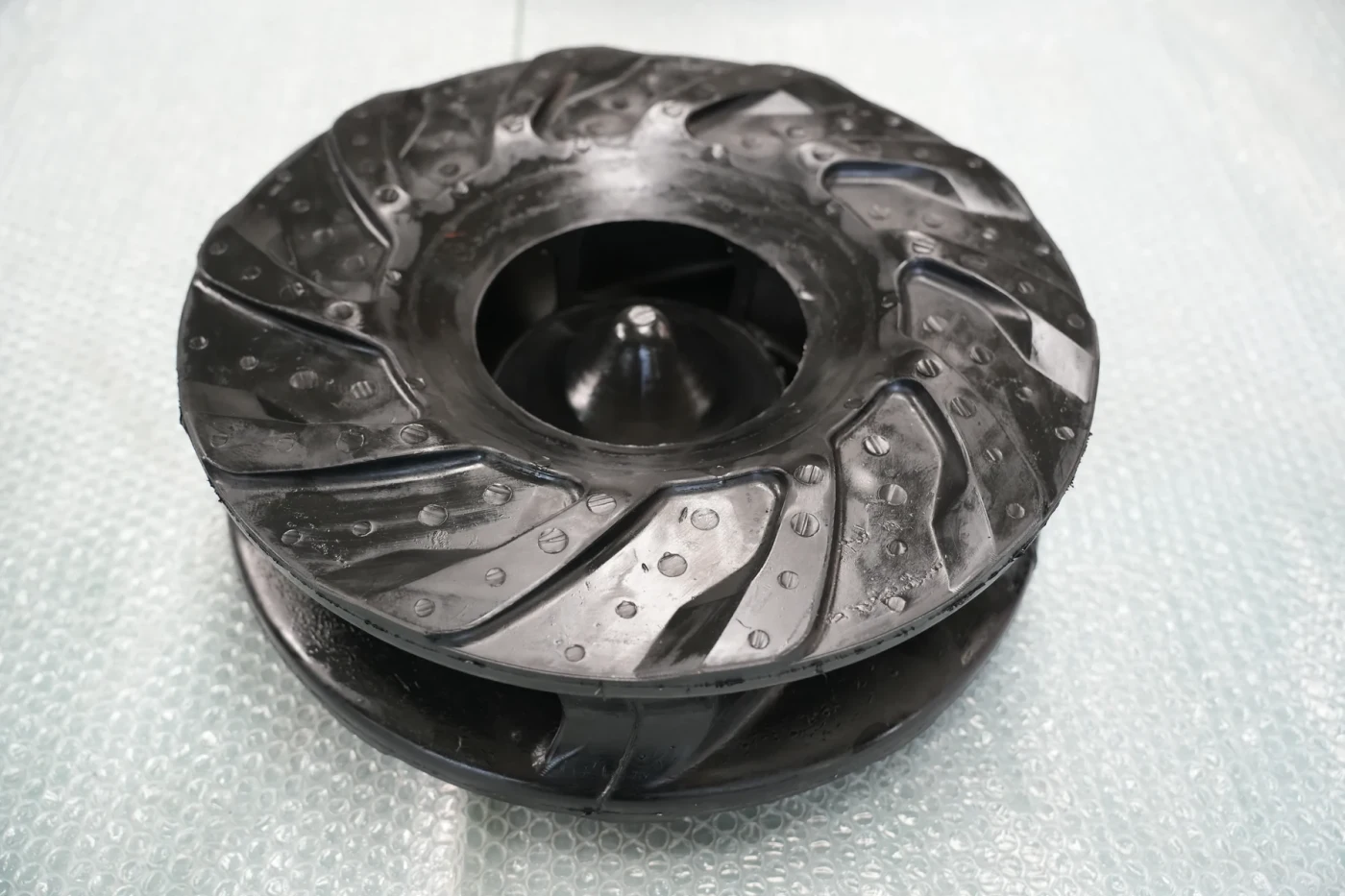
Rubber impeller and liner components; the exact compound and compatibility require the slurry composition.
Drive
Drive matched to pump speed
Selection
Duty, slurry & applicable curve

Compare catalogue operating records

Catalogue operating records

6 records

Range screening only. Flow/head limits are not interchangeable operating points. Open the printed table and request the applicable curve.

Catalogue modelOutlet mmFlow m³/hHead mSpeed rpmSource / selection
1.5/1B-AM(R)253.6–21.35–691200–3800PDF p. 6 ↗
2/1.5B-AM(R)387.2–42.487–401200–2600PDF p. 7 ↗
3/2C-AM(R)5121.6–69.1213–381300–2100PDF p. 9 ↗
4/3C-AM(R)7628.8–149.49.6–35.61000–1800PDF p. 10 ↗
6/4D-AM(R)10272–32412.6–44.7800–1350PDF p. 11 ↗
8/6E-AM(R)152126–64810–48500–1000PDF p. 13 ↗

1.5/1B-AM(R)

Outlet 25 mm

Flow m³/h
3.6–21.3
Head m
5–69
Speed rpm
1200–3800
PDF p. 6 ↗

2/1.5B-AM(R)

Outlet 38 mm

Flow m³/h
7.2–42.48
Head m
7–40
Speed rpm
1200–2600
PDF p. 7 ↗

3/2C-AM(R)

Outlet 51 mm

Flow m³/h
21.6–69.12
Head m
13–38
Speed rpm
1300–2100
PDF p. 9 ↗

4/3C-AM(R)

Outlet 76 mm

Flow m³/h
28.8–149.4
Head m
9.6–35.6
Speed rpm
1000–1800
PDF p. 10 ↗

6/4D-AM(R)

Outlet 102 mm

Flow m³/h
72–324
Head m
12.6–44.7
Speed rpm
800–1350
PDF p. 11 ↗

8/6E-AM(R)

Outlet 152 mm

Flow m³/h
126–648
Head m
10–48
Speed rpm
500–1000
PDF p. 13 ↗

Six shared AM/AM(R) catalogue records. Printed notation is retained. These ranges include different conditions and are not a rubber-specific performance guarantee; request the applicable rubber-lined curve.

Need a model-specific curve?

Provide the actual slurry and operating point so the proposed model, speed and material can be reviewed together.

Rubber-Lined Slurry Pump construction and operation

Rubber-lined horizontal slurry pumps combine a dry-installed bearing frame with replaceable elastomer wet-end components. They are an option for fine-particle slurry when the rubber compound is compatible with the liquid, temperature and particle shape. The lining is a material choice within a pump arrangement; it does not make every corrosive or abrasive duty suitable for rubber.

The supplied manual identifies rubber impellers and liners and shows related metal and rubber constructions. Selection therefore starts with the actual slurry rather than the external appearance of the pump. Sharp particles, oversized solids, hydrocarbons and temperature all need review before an elastomer is specified. Keep the selected rubber compound and part references in the quotation and spare-parts list.

  • Replaceable rubber wet endImpeller and liner components can be identified from the assembly drawing for planned maintenance.
  • Review the complete liquidProvide chemistry, temperature and the solids distribution together when discussing rubber compatibility.
  • A serviceable surface installationKeep access to the wet end, seal, bearing frame and drive when laying out the pump station.

Components, materials and seals

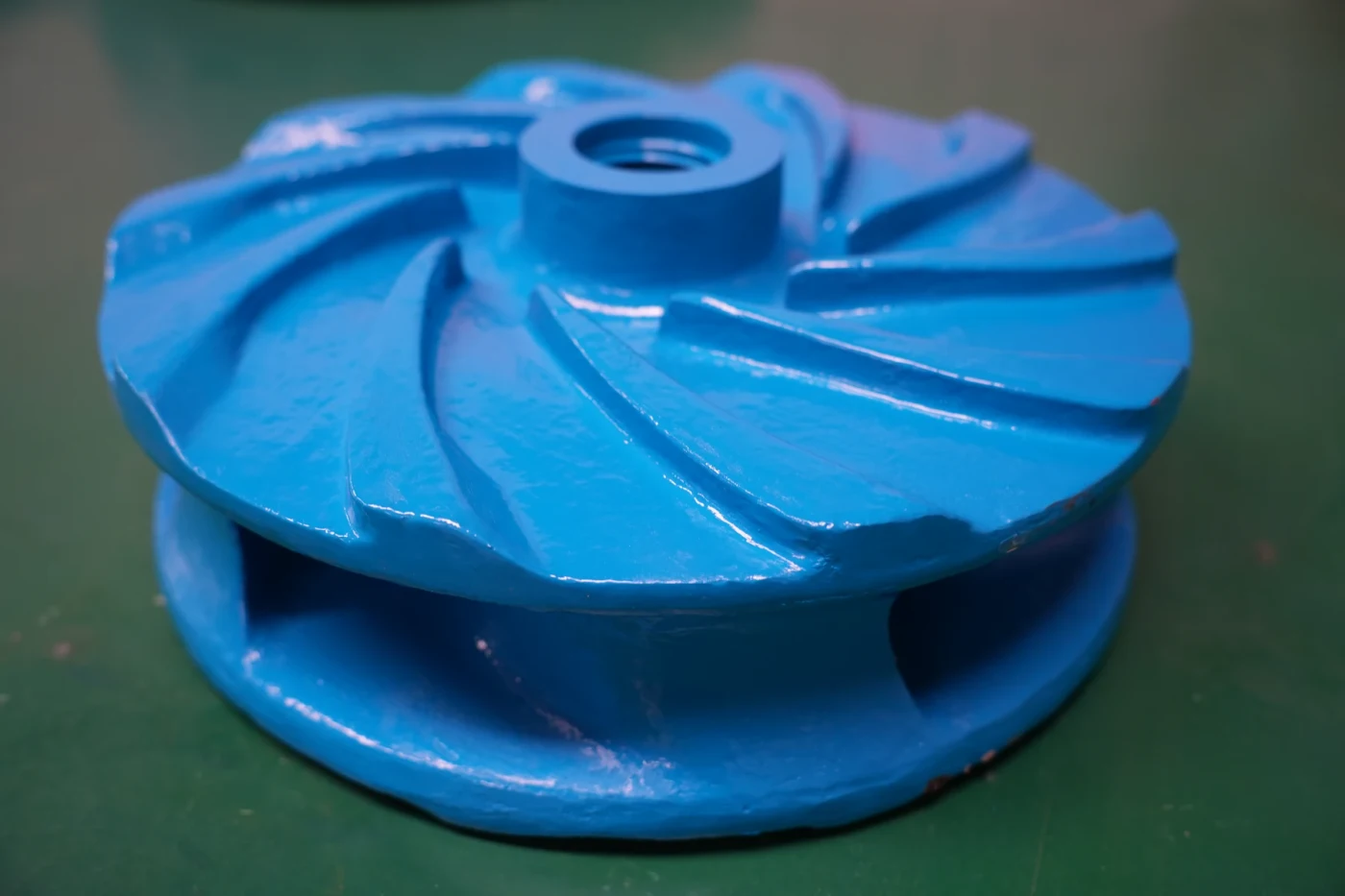
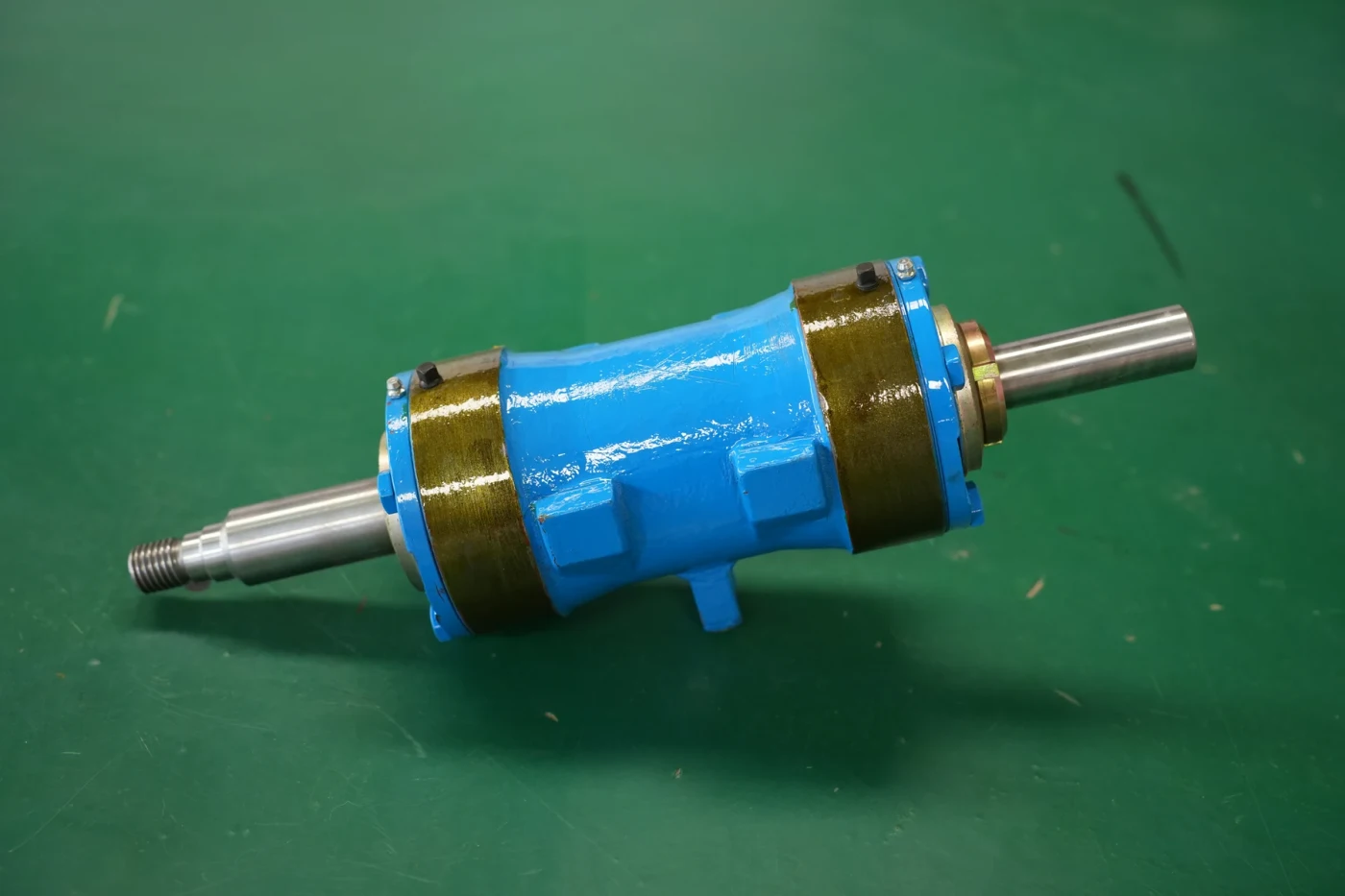
AM-family metal impeller

Impeller

Review impeller construction and material against the solids, speed and hydraulic duty. Use the selected model parts schedule.

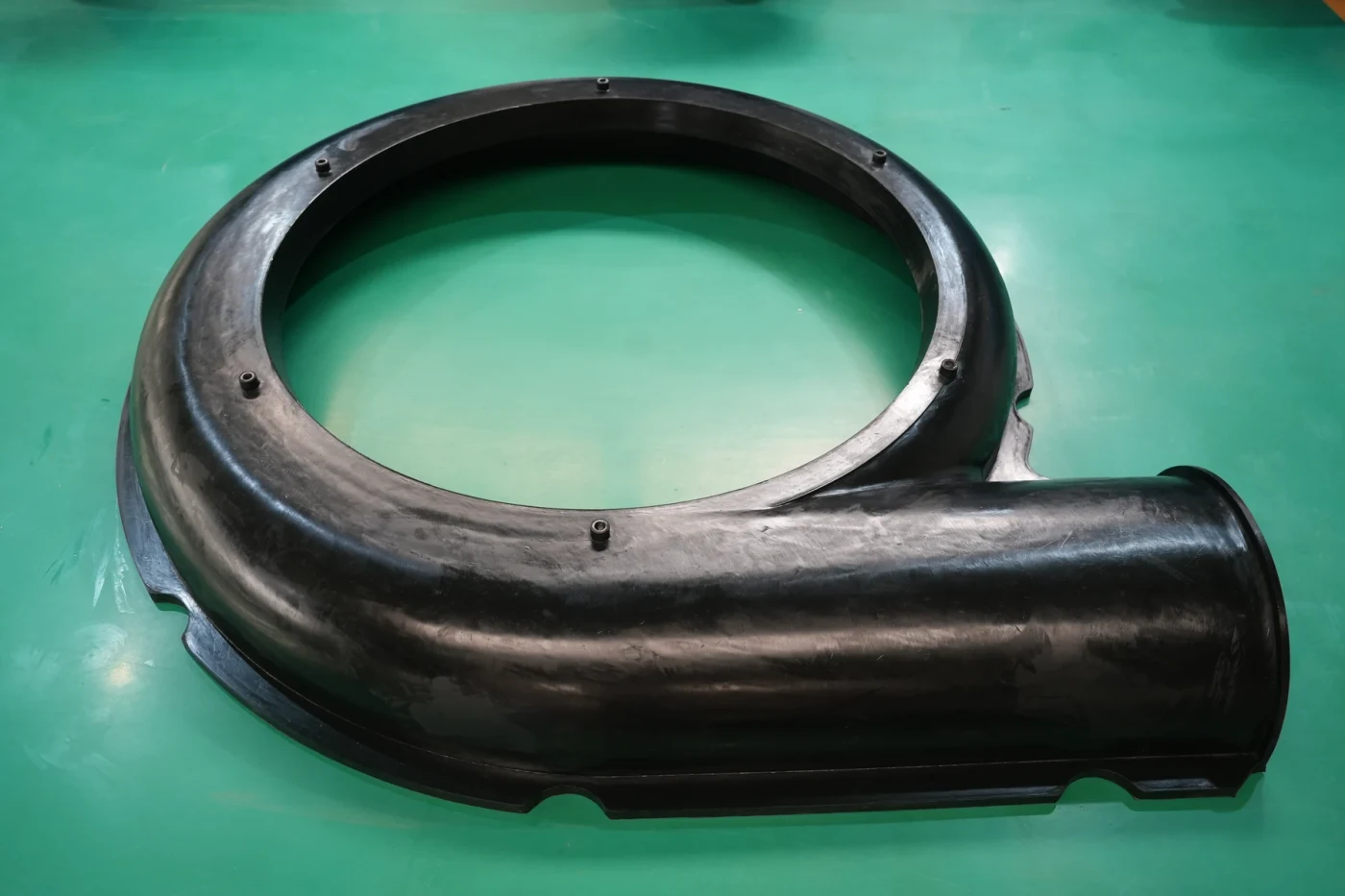
AM-family rubber rear liner

Casing & wear parts

Rubber impeller and liner components; the exact compound and compatibility require the slurry composition.

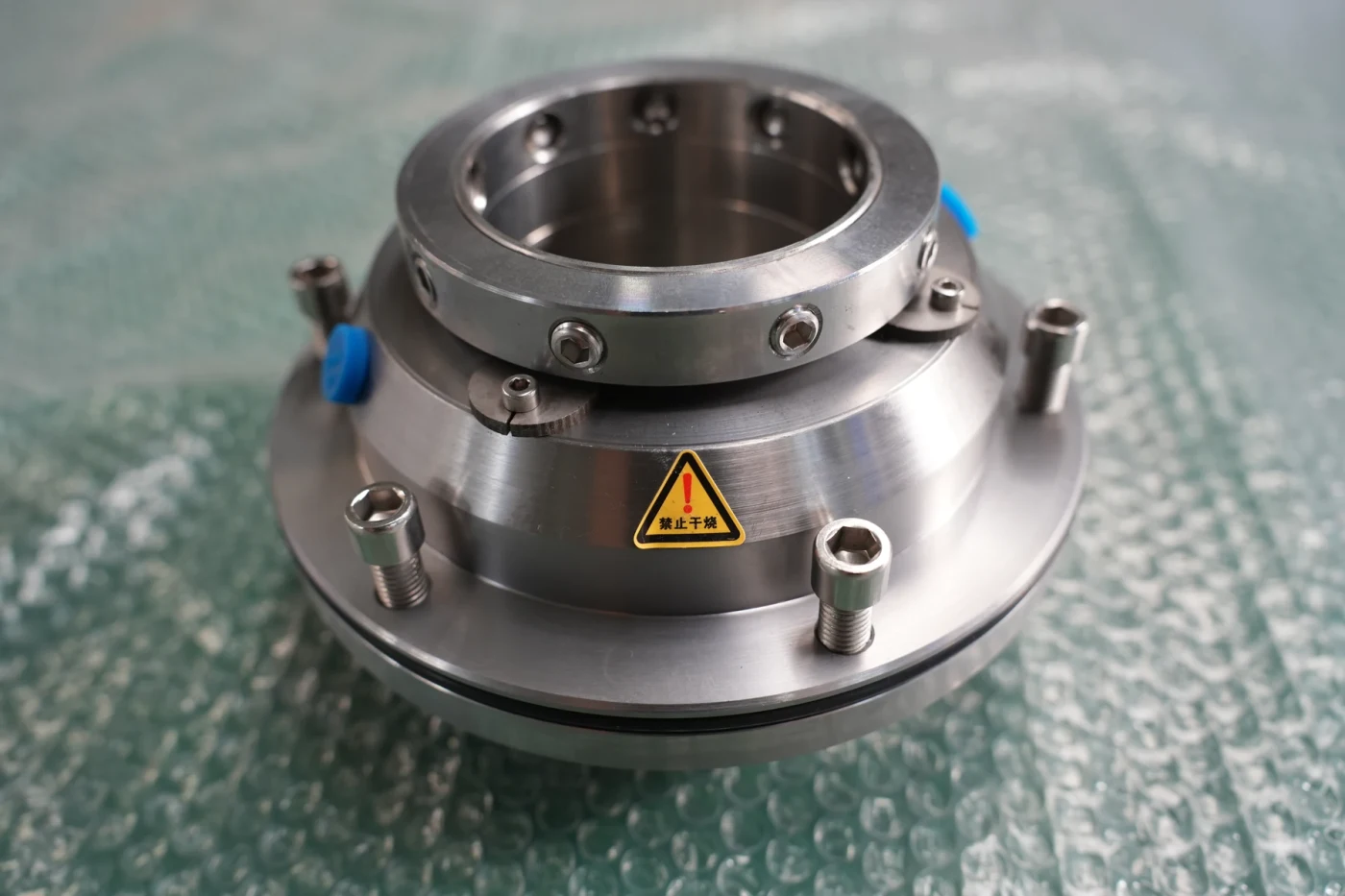
AM-family mechanical seal components

Shaft sealing

Select the applicable seal around inlet pressure, liquid chemistry and utility availability. Seal options require the selected assembly.

AM-family bearing assembly

Bearing assembly

Coordinate shaft support, alignment, lubrication and transmission loads. Keep access for inspection and maintenance.

Materials, sealing & duty requirements

Review itemRequired information
Wetted componentsRubber impeller and liner components; the exact compound and compatibility require the slurry composition.
Sealing / interfacesPacking, expeller or mechanical, by configuration
Solids informationConcentration basis, particle distribution, maximum size, hardness and shape
Liquid conditionsComplete chemistry, liquid and solids densities, operating temperature
Installation informationSuction level and pressure, pipework, drive and maintenance access
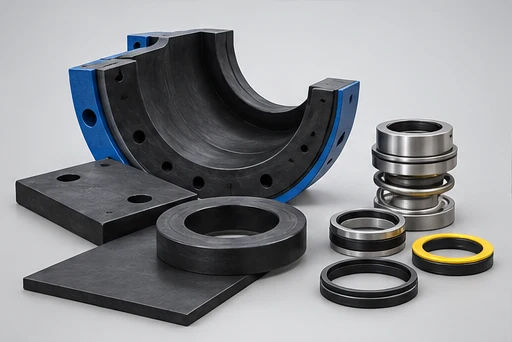
Rubber-Lined Slurry Pump: illustrative wear materials and shaft-seal components

Check the complete operating point

  • Normal and maximum flow / head
  • Density and concentration range
  • Particles, chemistry and temperature
  • Site arrangement and operating cycle

AI-generated family illustrations. The selected configuration follows the agreed model and drawing.

Installation & drive arrangement

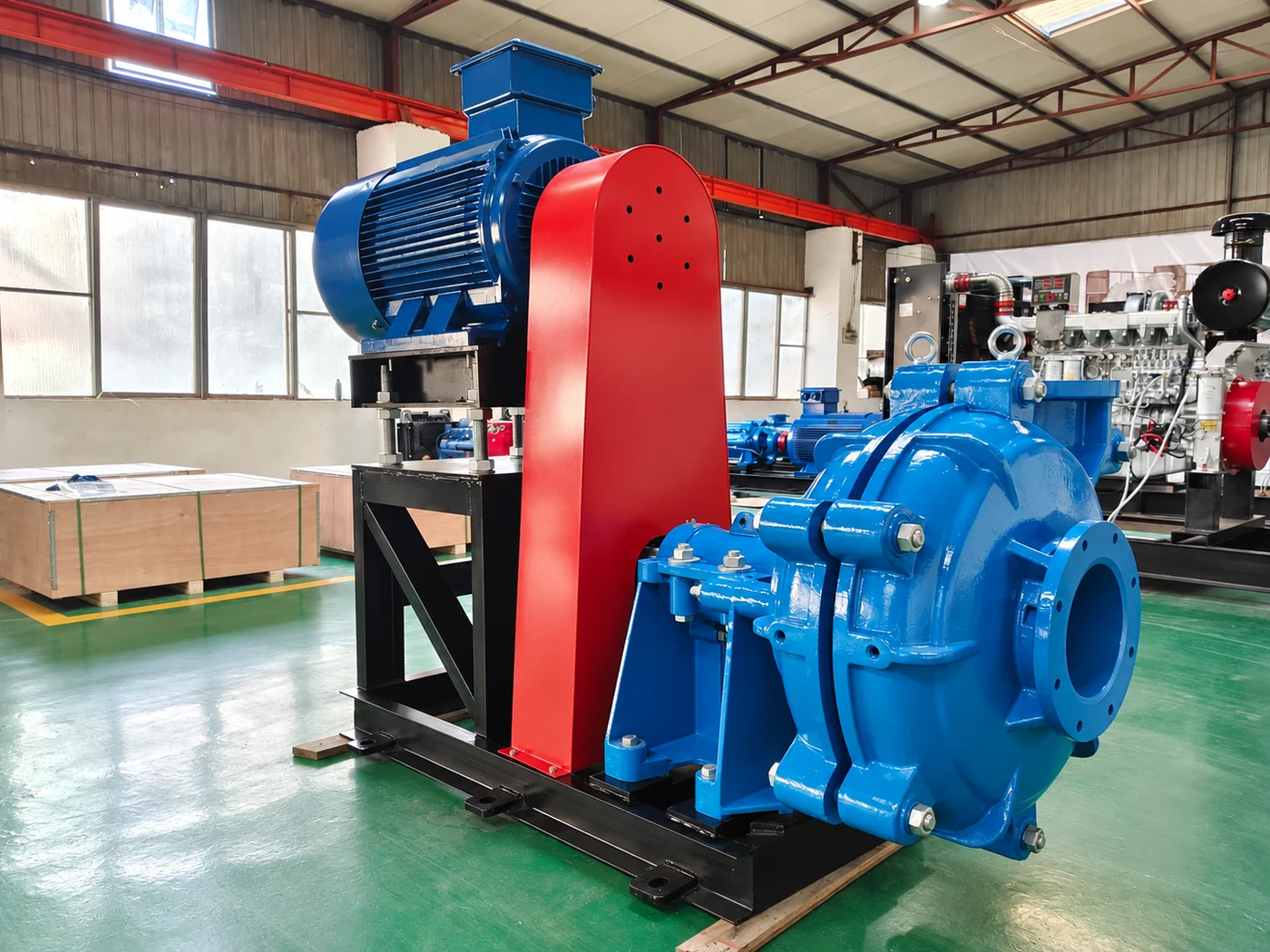
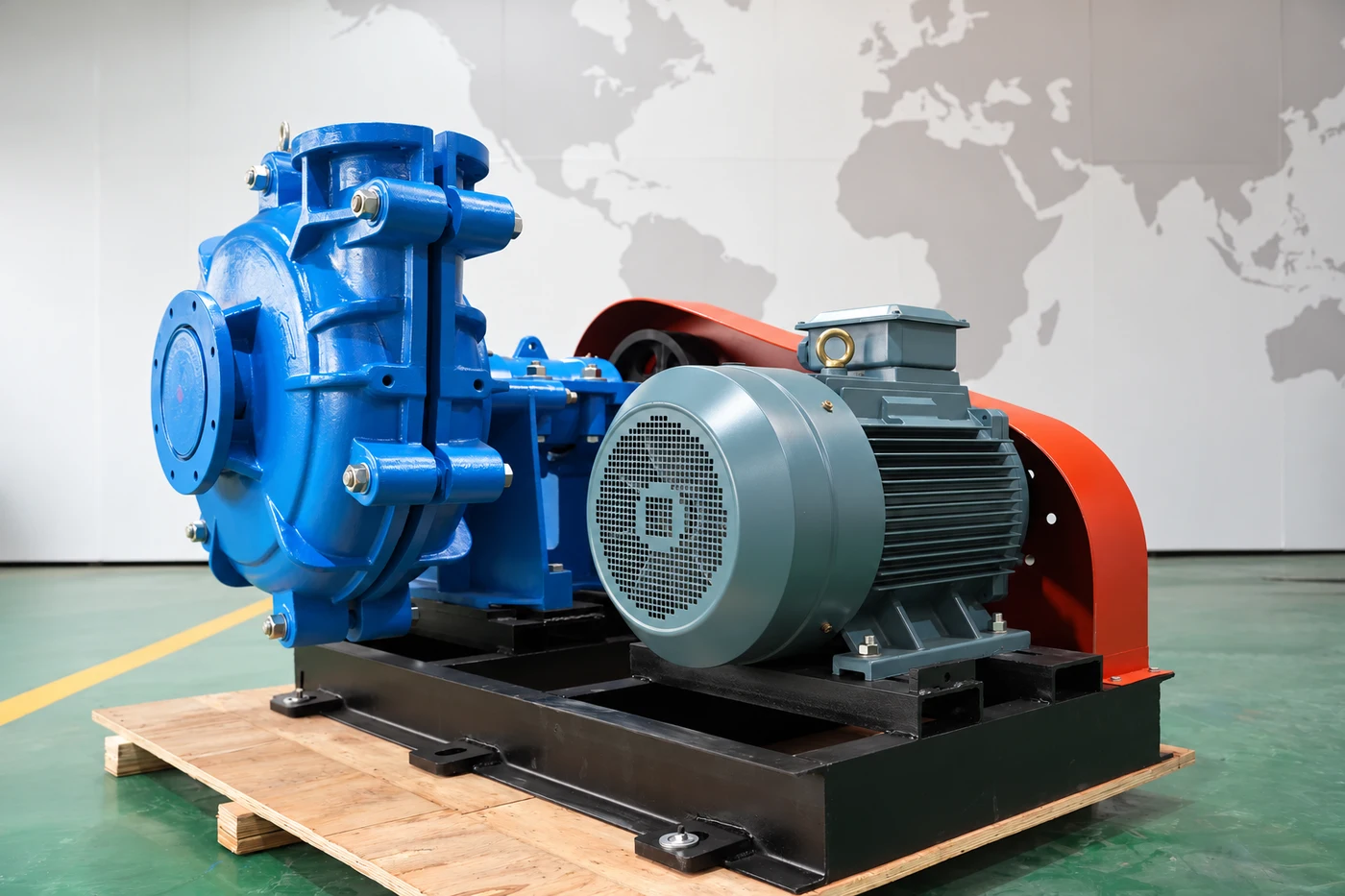
Illustration of a blue horizontal slurry pump and electric motor on a base frame

Direct-coupled arrangement

Confirm the selected speed and motor arrangement, common-base alignment and removal clearances. The drawing must match the proposed set.

Illustration of horizontal slurry-pump belt-drive assembly

Transmission & speed review

Where a belt arrangement is proposed, review ratio, absorbed power, tensioning, guarding and foundation loads for the selected equipment.

  • Foundation and alignment
  • Suction pipework
  • Seal utilities
  • Maintenance clearance

Typical applications

Application descriptions are selection contexts. Suitability depends on the selected equipment and actual process conditions.

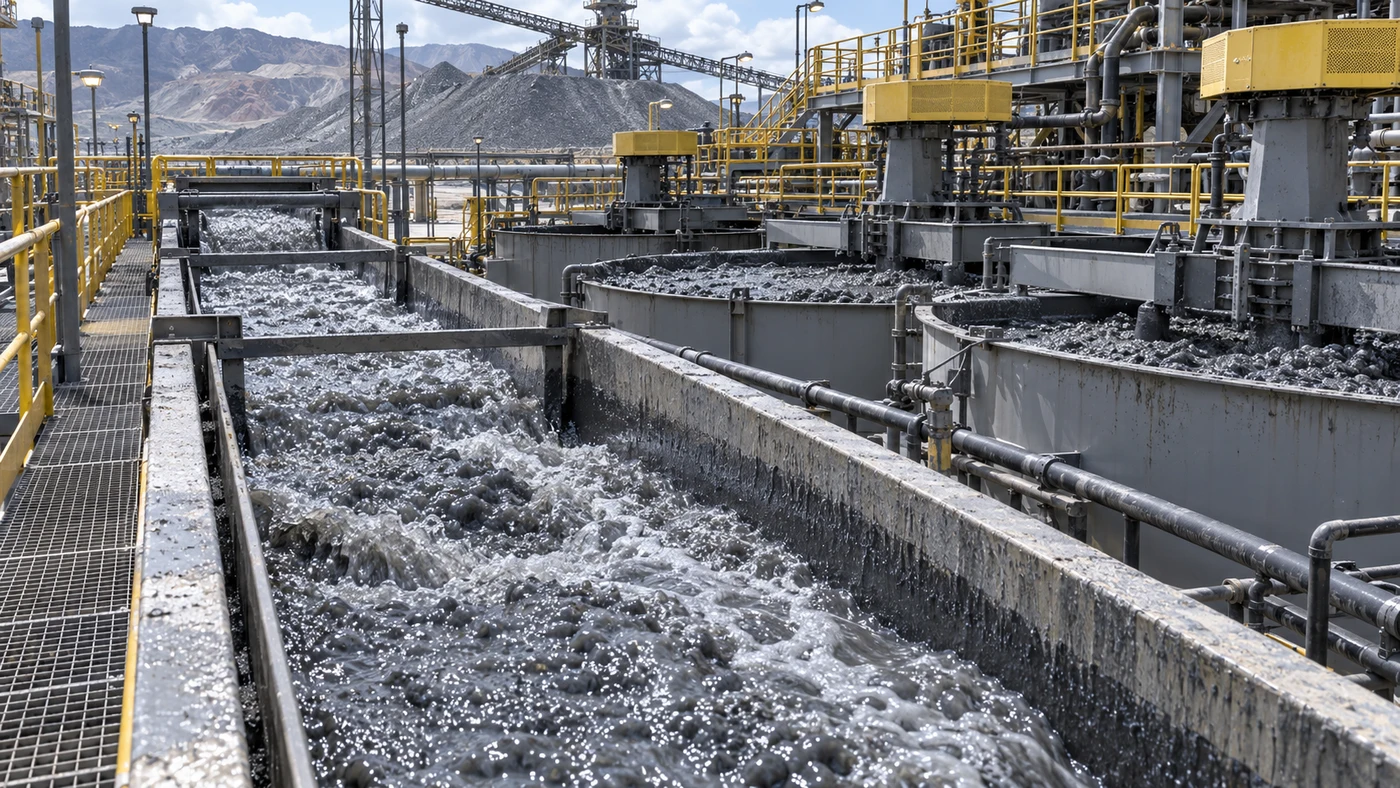
AI illustration of mineral-processing channels carrying slurry through an industrial plant

Mineral-processing slurry

Fine solids in process circuits require both abrasion and chemical compatibility checks. Include particle shape and any flotation reagents.

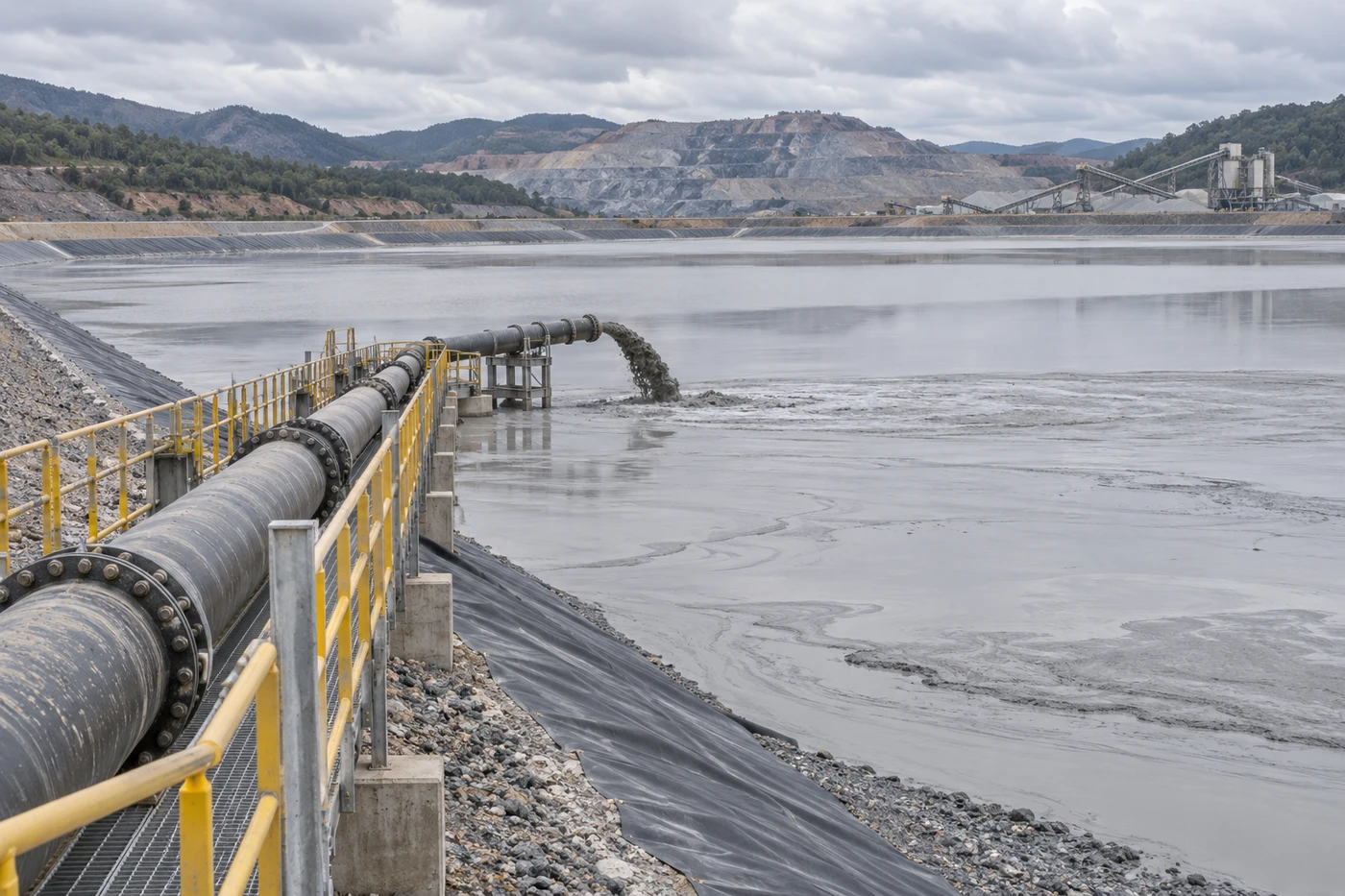
AI illustration of a tailings pipeline discharging slurry into a storage pond

Tailings transfer

Define concentration changes, static lift and pipeline friction over the full operating cycle. Assess rubber against the actual tailings.

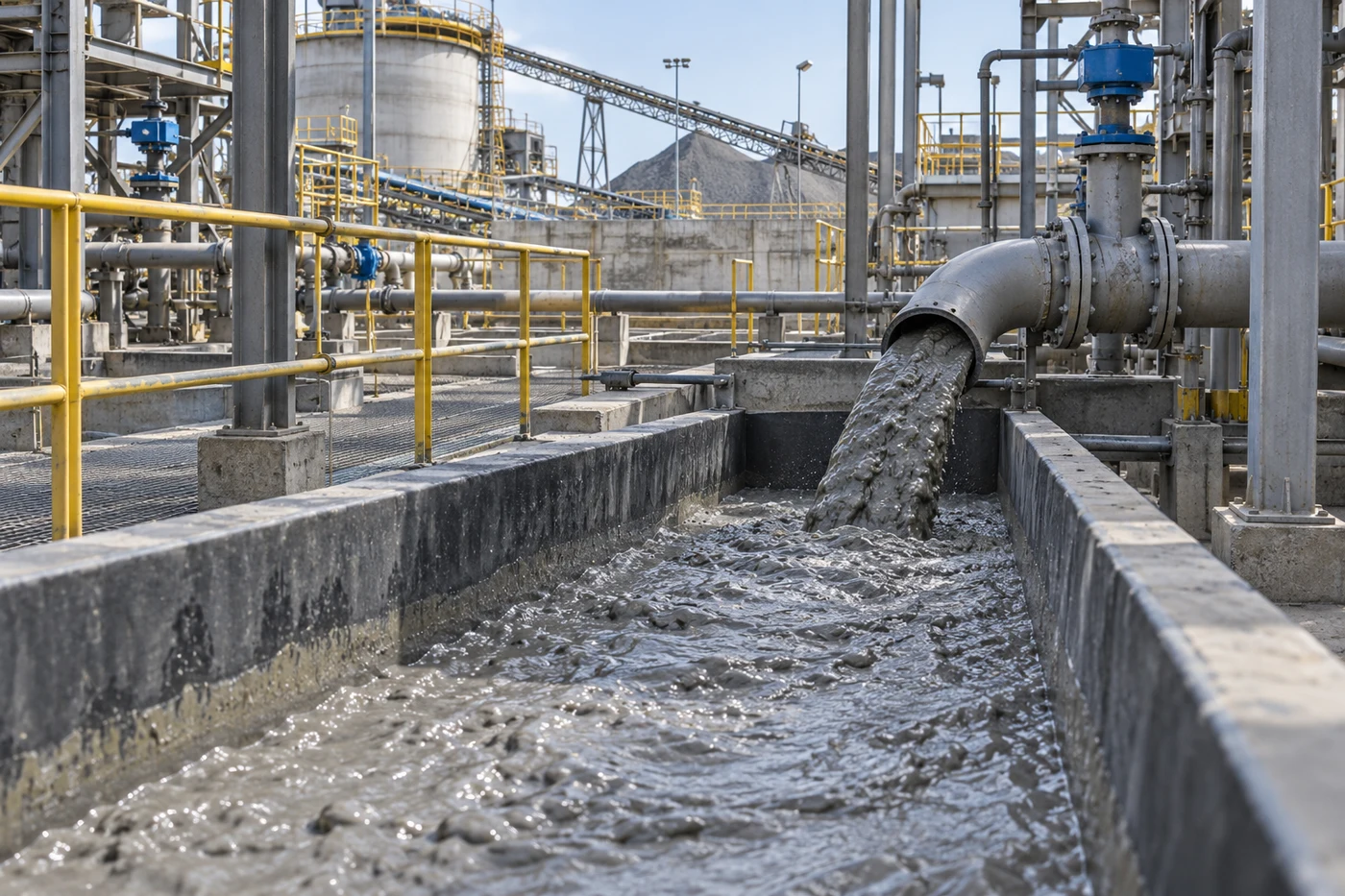
AI illustration of a pipe discharging slurry into a concrete channel at an industrial plant

Industrial process slurry

Review dissolved chemicals and temperature as well as suspended solids before agreeing the wet-end compound.

Choose the supply scope

Select a scope below to carry it into the enquiry. The final equipment and documents are defined in the quotation.

Illustration of a blue horizontal slurry pump and electric motor on a base frame

Pump assembly

Pump, wet-end material, seal and shaft support for the selected duty.

  • Hydraulic assembly
  • Materials and sealing
  • Existing-drive interfaces
Illustration of a blue horizontal slurry pump and electric motor on a base frame

Electric pump set

Pump and matched motor with the agreed transmission, mounting and guarding.

  • Motor and operating speed
  • Base and transmission
  • Guarding and alignment
AM-family rubber impeller

Configured equipment package

Agree the driver and complete equipment interfaces around the installation.

  • Driver and auxiliary scope
  • Wear spares and tools
  • Drawings and documentation

Define what arrives with the equipment

Equipment & interfaces

Selected pump, materials, seal, drive, connections, mounting and any required auxiliary services.

Inspection & documentation

Agree drawing revision, inspection requirements, applicable acceptance criteria and the documents required with delivery.

Packing & service spares

Specify preservation, packing, identification and an initial spare-parts list appropriate to the maintenance plan.

From preparation to shipment

Slurry pump casings, impellers and mounting components arranged on the workshop floor

Components & material review

Identify component drawings and materials for the agreed pump or parts scope.

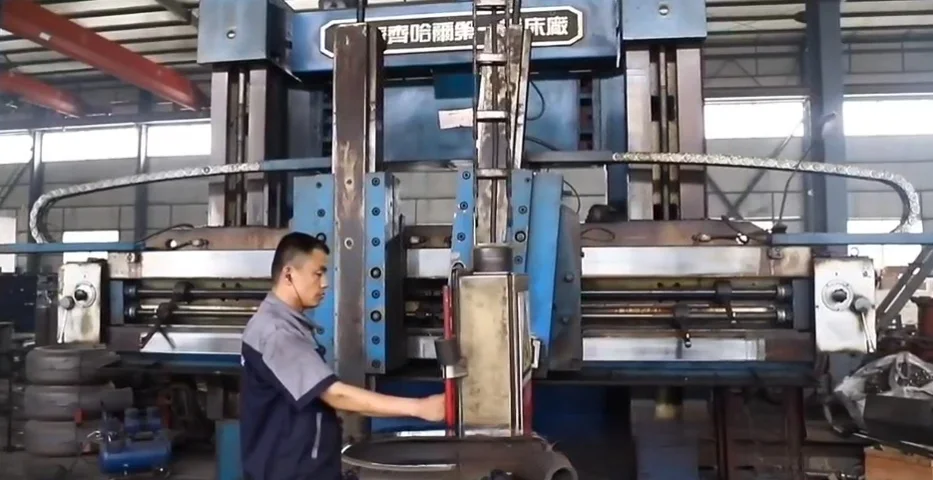
Operator working at a large machining machine in the workshop

Machining & interfaces

Check the critical faces, bores, fits and connections against the applicable drawing.

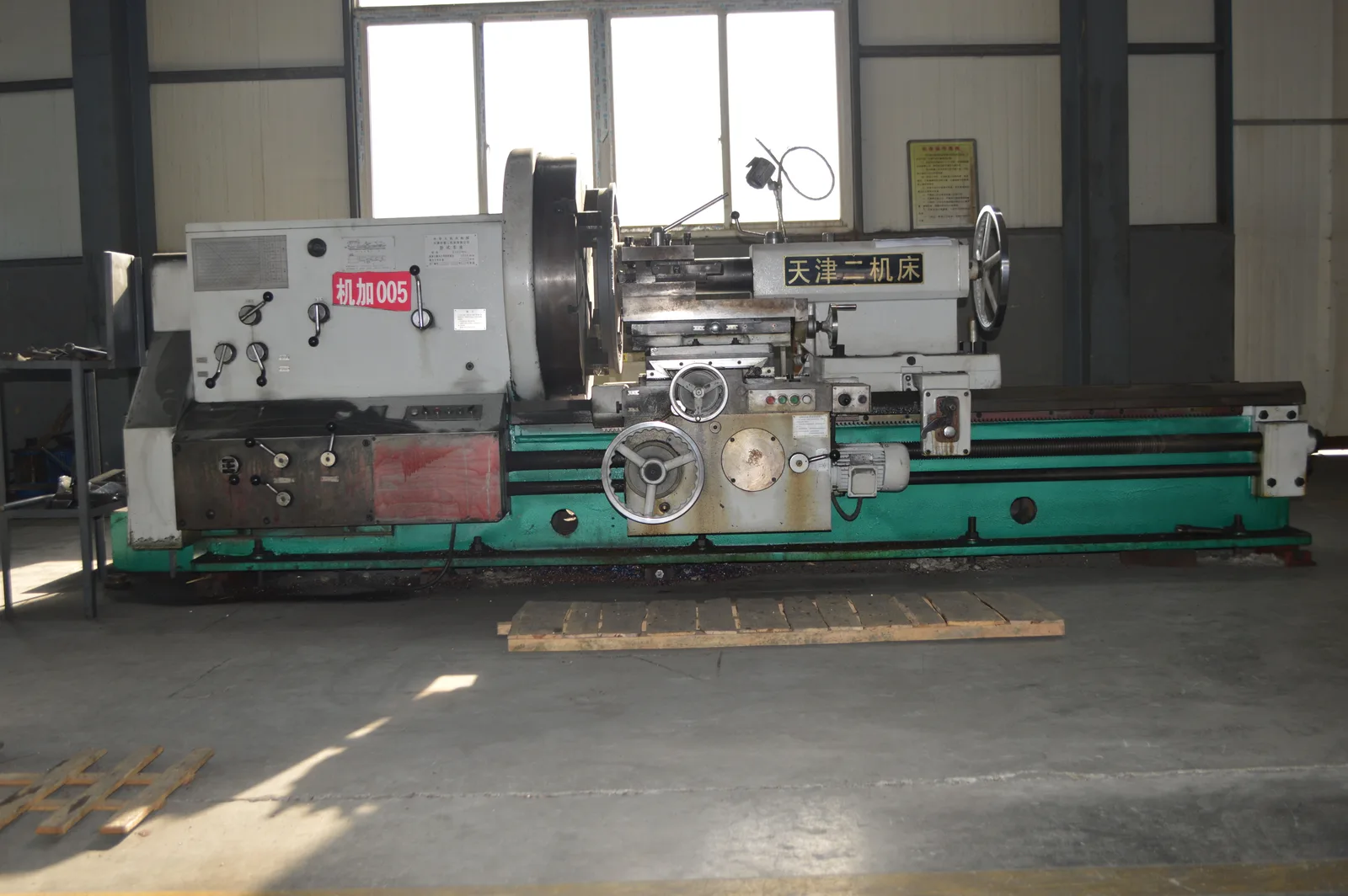
Industrial lathe for machining pump components

Inspection planning

Agree inspection points, acceptance criteria and any requested records before supply.

Pump assemblies prepared in the workshop

Packing & handover

Confirm identification, preservation, packing and the documents required for handover.

Technical documents

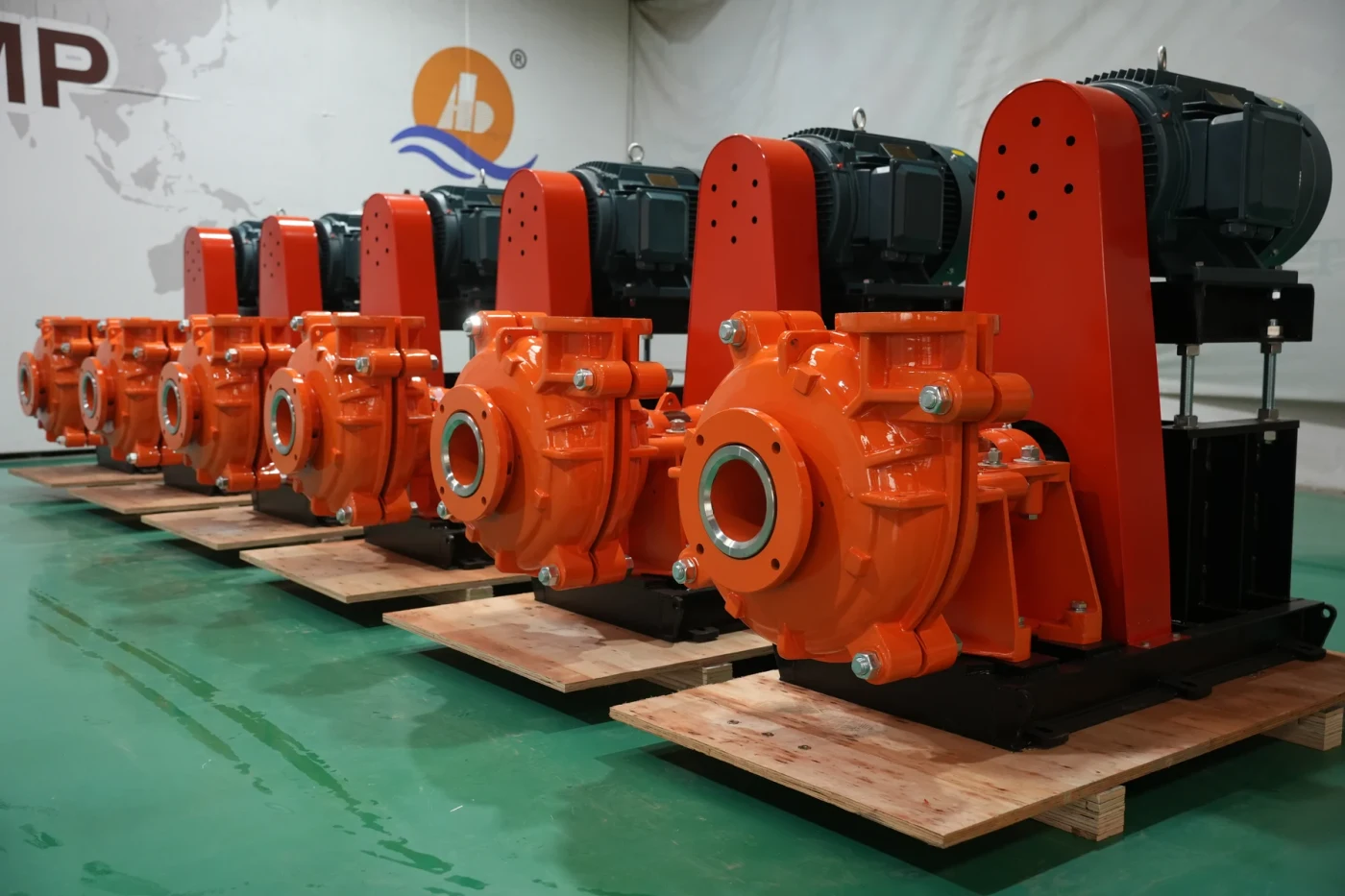
Illustration of orange horizontal slurry-pump set

Original source catalogue

Original series introduction, drawings and available technical tables.

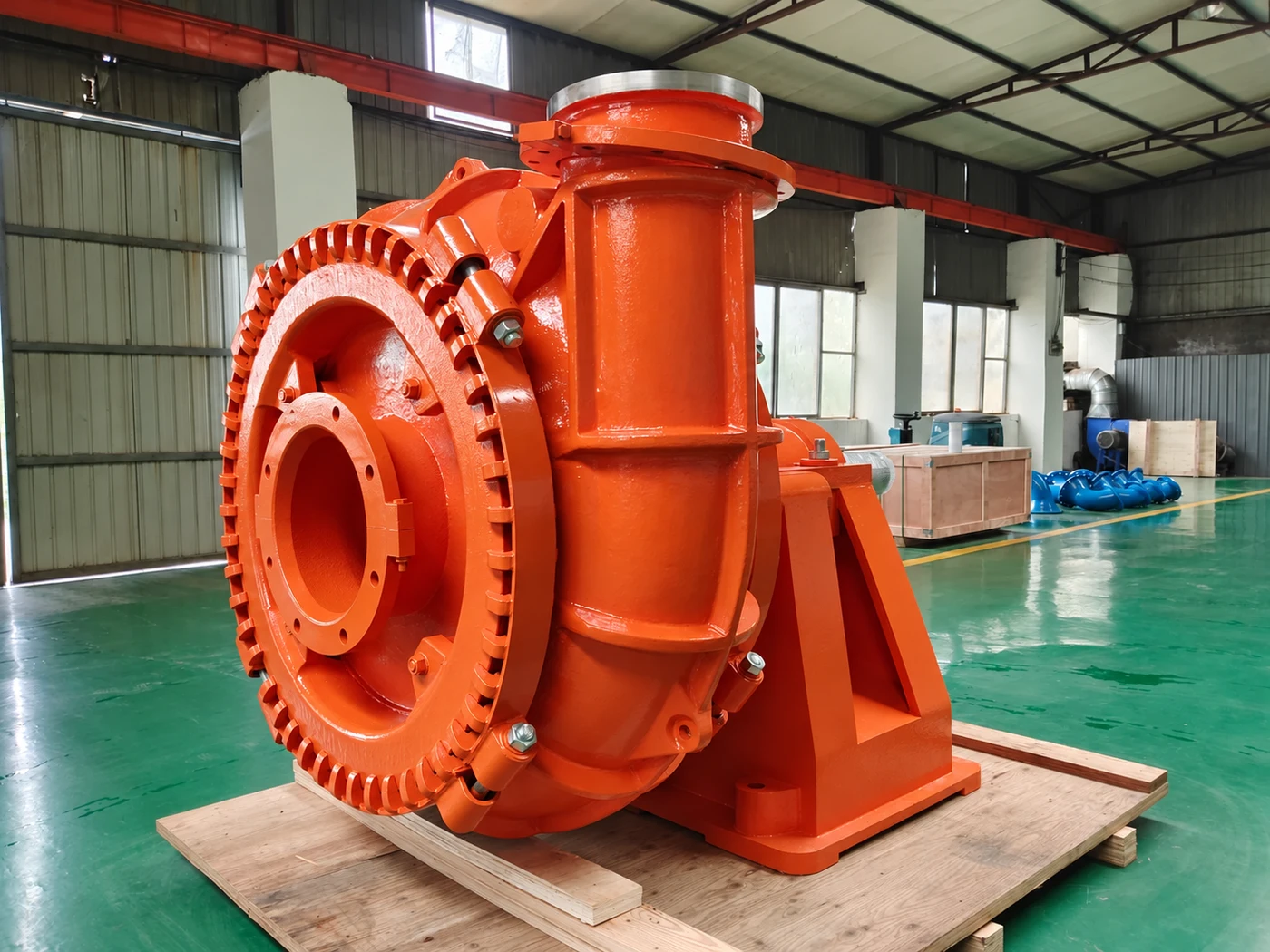
Illustration of an orange gravel pump with a large inlet flange and discharge outlet

Slurry family brochure

Product arrangements and original family drawings. Confirm the applicable series and model.

Illustration of a blue horizontal slurry pump and electric motor on a base frame

Selected curve & arrangement

Request the applicable curve, materials, dimensions and installation instructions.

Pump questions

Is rubber always better than metal?
No. Rubber can suit some fine-particle duties, while sharp solids, incompatible chemicals or excessive temperature can make it unsuitable. Compare the complete slurry and proposed compound before selecting the wet end.
How is the pump selected?
Start with flow, total dynamic head, slurry density, solids concentration and size, temperature, chemistry and installation. Review these together on the applicable curve.
Are the images dimensional drawings?
Catalogue drawings show the source construction. Family exterior references and illustrative components are labelled. Use the selected model’s approved arrangement drawing for dimensions and installation.
What is included in the quotation?
The selected supply scope, materials, interfaces, inspection requirements, spares and documents must be agreed in the quotation. An illustration alone does not define the delivered equipment.
What if there is no numerical table on this page?
Send the operating requirement for a model-specific curve review. A product introduction or family envelope cannot replace a selected pump curve.
How do I use this enquiry form?
Choose any model, installation and supply options above, complete the required fields, and prepare a draft. Review it before copying, downloading or opening it in your email application.

Tell us about your slurry duty

Share the liquid, operating point and site arrangement for a useful selection discussion.

  • Operating pointFlow, head and operating range.
  • SlurryDensity, concentration and particles.
  • InstallationLiquid levels, drive and utilities.
Please enter your name.
Please enter your requirements.
0/5000
Please confirm that we may respond to your enquiry.